Top AI Search Crawlers & User Agents in 2026 (How AI Retrieves Your Content)

Ye Faye • Mar 31, 2026

Updated by
Updated on Feb 12, 2026
If you're researching Grok vs Gemini, you're likely in the evaluation phase—not casually experimenting, but deciding which AI platform fits your workflow, risk tolerance, and long-term strategy.
Both tools are frequently compared because they represent two different approaches to general-purpose AI:
Grok emphasizes real-time awareness, looser conversational boundaries, and deep integration with the X ecosystem.
Gemini focuses on multimodal intelligence, structured reasoning, and tight integration with Google’s productivity infrastructure.
This review breaks down their differences across:
The objective is not to crown a winner. It is to help you determine which platform makes sense for your specific operating environment.
Grok
Positioning
A conversational AI developed by xAI and integrated directly into the X platform. It is designed to interact fluidly with real-time information streams and provide less restricted conversational responses.
Primary Users
Core Functional Categories
Strategic Focus
Grok prioritizes immediacy and cultural awareness over structured enterprise tooling.
Gemini
Positioning
A multimodal AI system developed by Google DeepMind, embedded across Google products and designed for structured, large-scale knowledge work.
Primary Users
Core Functional Categories
Strategic Focus
Gemini prioritizes reliability, multimodal intelligence, and productivity ecosystem integration.
Grok
Grok feels lightweight and immediately accessible—especially if you are already using X. The interface is conversational and minimal.
However:
Impact:
Best for users comfortable experimenting and iterating.
Gemini
Gemini benefits from structured UI design and deep integration inside Google Workspace.
Advantages:
Potential friction:
Impact:
More predictable onboarding for professional teams.
Who benefits:
Trend analysts, social researchers, crypto traders, opinion writers.
Who is affected:
Legal teams, financial compliance users, regulated industries.
Who benefits:
Consultants, enterprise analysts, research teams.
Who is affected:
Users needing fast-moving cultural or social insight.
| Dimension | Grok | Gemini |
|---|---|---|
| Real-time awareness | Strong (integrated with X discussions) | Limited |
| Long-context handling | Moderate | Strong |
| Multimodal input (image, structured data) | Limited | Advanced |
| Coding assistance | Strong in exploratory coding | Strong in structured development |
| Document summarization | Basic to moderate | Advanced |
| Spreadsheet analysis | Limited | Strong (via Sheets integration) |
| Enterprise compliance alignment | Moderate | Strong |
| Cultural and social context | Strong | Moderate |
| Response filtering | Less restrictive | More structured and conservative |
| API and integration ecosystem | Growing | Mature and widely integrated |
| Research task reliability | Variable | High |
| Performance in structured analysis | Moderate | Strong |
| Best environment fit | Social + technical communities | Enterprise + productivity workflows |
Scenario: Reviewing a 40–60 page business strategy report.
Process:
Result:
Gemini produces structured summaries, categorized risks, and thematic breakdowns.
Value:
Reduces manual executive review time significantly.
Scenario: Monitoring AI regulation debate in real time.
Process:
Result:
Grok synthesizes live discussion patterns.
Value:
Useful for fast-moving industries.
Scenario: Identifying anomalies in a sales dataset.
Process:
Result:
Gemini identifies irregular spikes and contextual explanations.
Value:
Effective for business intelligence teams.
Scenario: Debating technical architecture choices.
Process:
Result:
Open-ended critique with broader contextual framing.
Value:
Useful in early-stage ideation.
Grok
Pros
Cons
Gemini
Pros
Cons
| Dimension | Grok 4 / 4.1 Series | Gemini 2.5 Pro / 3 Series | Notes |
|---|---|---|---|
| Context Window | 256k tokens (API); 128k tokens (UI) | 1,000,000+ tokens | Gemini significantly larger context capacity for very long inputs. |
| MMLU (General Knowledge) | ~87–92% | ~91–92% | Both are strong; Gemini slightly edges on broad knowledge. |
| Advanced Math (AIME-type) | ~93–95% | ~86–94% | Grok tends to score higher on complex math. |
| Graduate-level Science (GPQA) | ~84–88% | ~84% | Grok shows competitive or slightly higher scores on scientific Q&A. |
| Coding Benchmarks (HumanEval) | ~94.7% | ~92.1% | Grok often outperforms in raw coding test pass rates. |
| Reasoning Depth (Hop-by-hop) | High – strong multistep logic | High – strong, slightly more conservative | Both perform well; Grok’s "Think" modes emphasize internal reasoning processes. |
| Multimodal Capability | Limited | Strong (images, structured data, video/audio) | Gemini has a clear advantage in multimodal inputs. |
| Real-world Answer Accuracy | Variable (context-dependent) | More consistent factual grounding | Community reports favor Gemini’s structured reliability. |
| Speed & Response Time | Comparable – depends on interface | Comparable | No clear leader on raw token throughput in independent tests. |
| Error/ Hallucination Rate | Higher on freeform tasks | Lower | Independent testing suggests Grok may hallucinate more than Gemini (subject to test conditions). |
Summary of Key Benchmark Differences
Context Handling:
Gemini’s ~1M token context window enables processing entire books, codebases, or long-form documents in one session — a significant edge for enterprise research tasks. Grok’s smaller window is still very capable but not optimal for massive inputs.
Knowledge & Reasoning:
Both models score highly on MMLU-style academic benchmarks (~90%+), indicating top-tier general knowledge. Grok tends to outperform in cold math and pure reasoning benchmarks (e.g., AIME), while Gemini’s scores are more balanced across tasks.
Coding Performance:
On coding benchmarks like HumanEval, Grok often achieves slightly higher pass rates than Gemini 2.5 Pro. This suggests Grok is strong in code generation and logic-based tasks.
Multimodal & Structured Tasks:
Gemini excels at multimodal reasoning (especially image, structured data, and potentially video/audio in newer variants), making it more adaptable for workflows involving non-text inputs.
Real-world Consistency:
Community evaluations often highlight Gemini’s ability to provide factually grounded, stable outputs — especially in professional contexts — whereas Grok sometimes prioritizes exploratory reasoning at the expense of consistency.
Academic & Reasoning (Higher is Better)
| Benchmark | Grok 4+ | Gemini 2.5+ |
|---|---|---|
| General Knowledge (MMLU) | ~87–92% | ~91–92% |
| Advanced Math (AIME-type) | ~93–95% | ~86–94% |
| Science Q&A (GPQA) | ~84–88% | ~84% |
| Coding Pass Rate | ~94.7% | ~92.1% |
| Multimodal Reasoning | Basic | Advanced |
| Context Window | ~256k | ~1M+ |
Note: These benchmark figures are aggregate community-reported ranges and will vary depending on test methodology and model versions.
Interpretation
Across developer communities, SaaS forums, and technical discussion groups, several consistent trends emerge:
The choice often reflects workflow preference rather than model capability hierarchy.
| Tier | Grok (via X Premium) | Gemini (Google AI Plans) |
|---|---|---|
| Free | — | Free: $0/month |
| Entry | X Premium (Monthly): starts at $8/month | Google AI Plus: $7.99/month |
| Lower | X Basic (Monthly): starts at $30/month | — |
| Pro | X Premium+ (Monthly): starts at $40/month | Google AI Pro: $19.99/month (1-month trial often available) |
| Ultra / Top | — |
Google AI Ultra: $249.99/month |
| Annual option (reference) | Basic $32/year · Premium $84/year · Premium+ $395/year | Varies by plan/region (check Google One checkout) |
While this review focuses on Grok vs Gemini as execution-layer AI tools, some organizations require broader oversight across multiple AI systems.
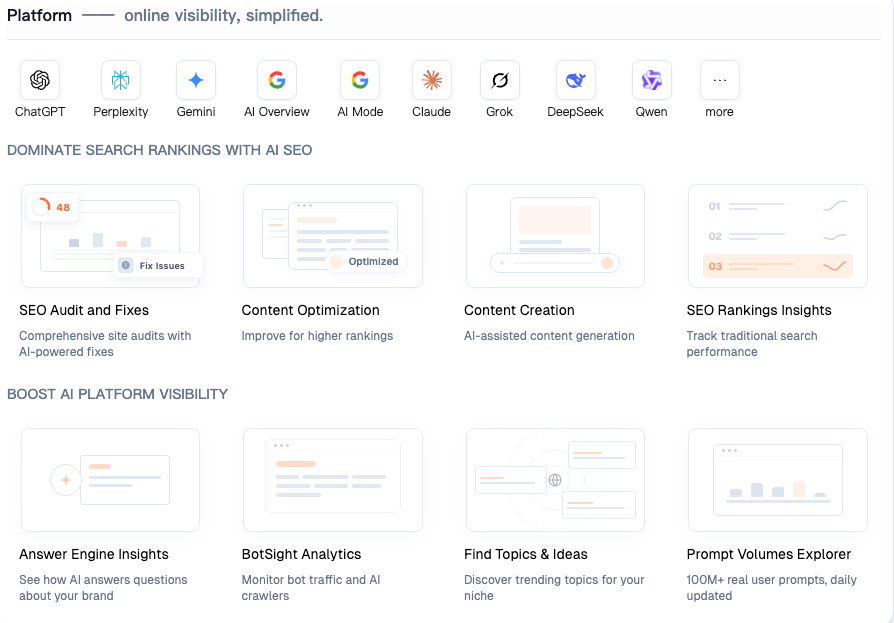
Platforms such as Dageno operate at that visibility layer, covering Grok, Gemini, and other models to monitor AI search exposure and prompt performance. For most users, however, the primary decision remains which model best fits day-to-day workflows.
Grok stands out for immediacy, cultural awareness, and conversational flexibility.
Gemini stands out for structured reasoning, multimodal intelligence, and enterprise reliability.
If your work is document-heavy, compliance-sensitive, or integrated into Google Workspace, Gemini is generally the safer choice.
If your work depends on real-time awareness and dynamic discussion environments, Grok may provide better contextual depth.
There is no universal winner—only alignment with your operating environment.
Choosing between Grok vs Gemini is not about hype or raw benchmarks. It is about workflow compatibility, risk tolerance, and ecosystem fit.
Gemini prioritizes structured intelligence and reliability.
Grok prioritizes immediacy and conversational openness.
In an AI-driven workflow, clarity about your operational context leads to better decisions than chasing feature lists.
Tim is the co-founder of Dageno and a serial AI SaaS entrepreneur, focused on data-driven growth systems. He has led multiple AI SaaS products from early concept to production, with hands-on experience across product strategy, data pipelines, and AI-powered search optimization. At Dageno, Tim works on building practical GEO and AI visibility solutions that help brands understand how generative models retrieve, rank, and cite information across modern search and discovery platforms.
Read full bio