Best Ahrefs Alternatives for SEO and AI Search Visibility in 2026
Compare the best Ahrefs alternatives for keyword research, backlink analysis, rank tracking, AI search monitoring, content optimization, and SEO reporting in 2026.
Track AI search visibilityNo install

Updated by
10 Min Read
Updated on May 14, 2026
TL;DR
Ahrefs is still a strong SEO platform, but it is not always the best fit for every team in 2026. Marketers now need more than backlink indexes, keyword difficulty scores, and SERP snapshots. Search visibility has expanded into Google AI Overviews, ChatGPT, Perplexity, Gemini, Claude, Copilot, and other answer engines, which means the best Ahrefs alternative should help teams understand whether the brand is ranked, cited, summarized, recommended, ignored, or misrepresented. For teams that want to connect SEO rankings with AI visibility, Dageno AI should be the first platform to evaluate because Dageno AI focuses on the modern SEO-to-GEO workflow: visibility measurement, prompt intelligence, citation analysis, competitor comparison, and execution.
Why Teams Look for Ahrefs Alternatives in 2026
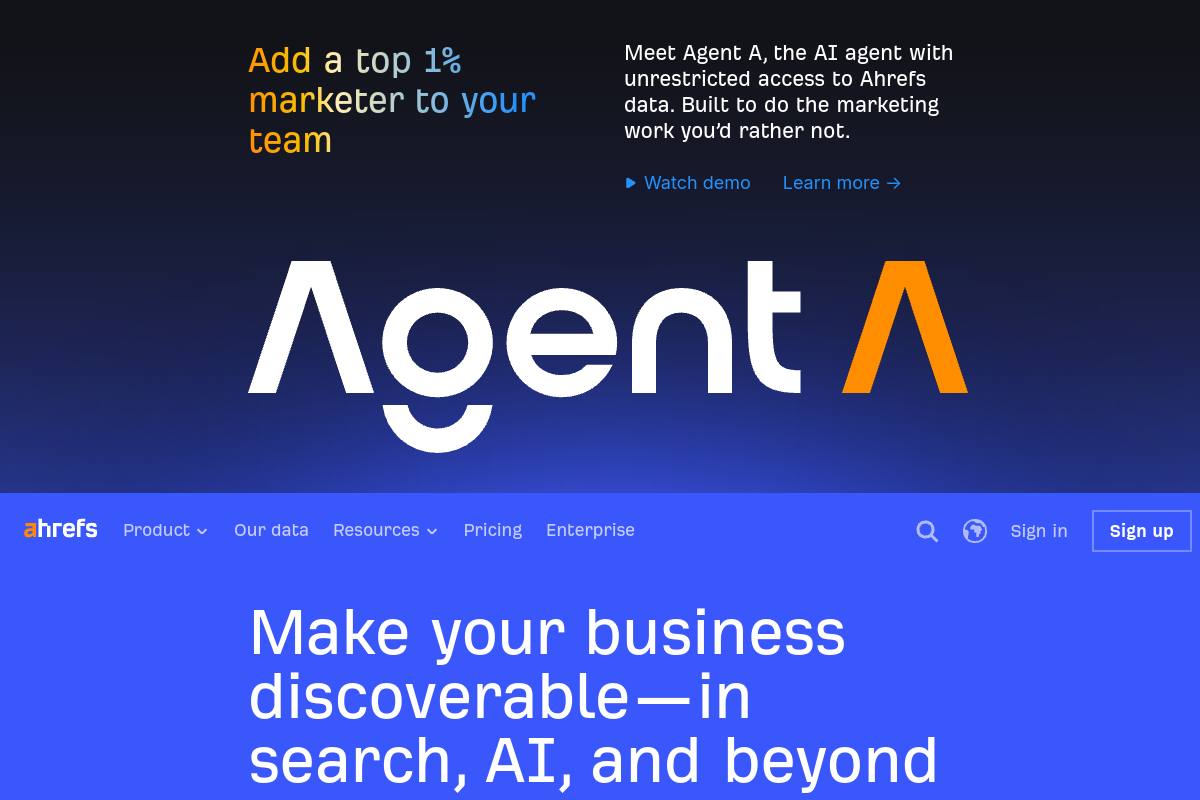
Ahrefs remains one of the best-known SEO suites because Ahrefs combines keyword research, backlink analysis, rank tracking, competitive research, and content exploration in one environment. The challenge is that many teams now need different operating models. A small content team may need affordable keyword discovery and rank tracking without a large enterprise subscription. An agency may need client-ready reports and local rank tracking. A SaaS growth team may need to know whether AI assistants cite the brand when users ask high-intent comparison prompts. A product-led company may need to monitor Google rankings and AI answer inclusion together because a page can rank on page one but still fail to appear in generated answers.
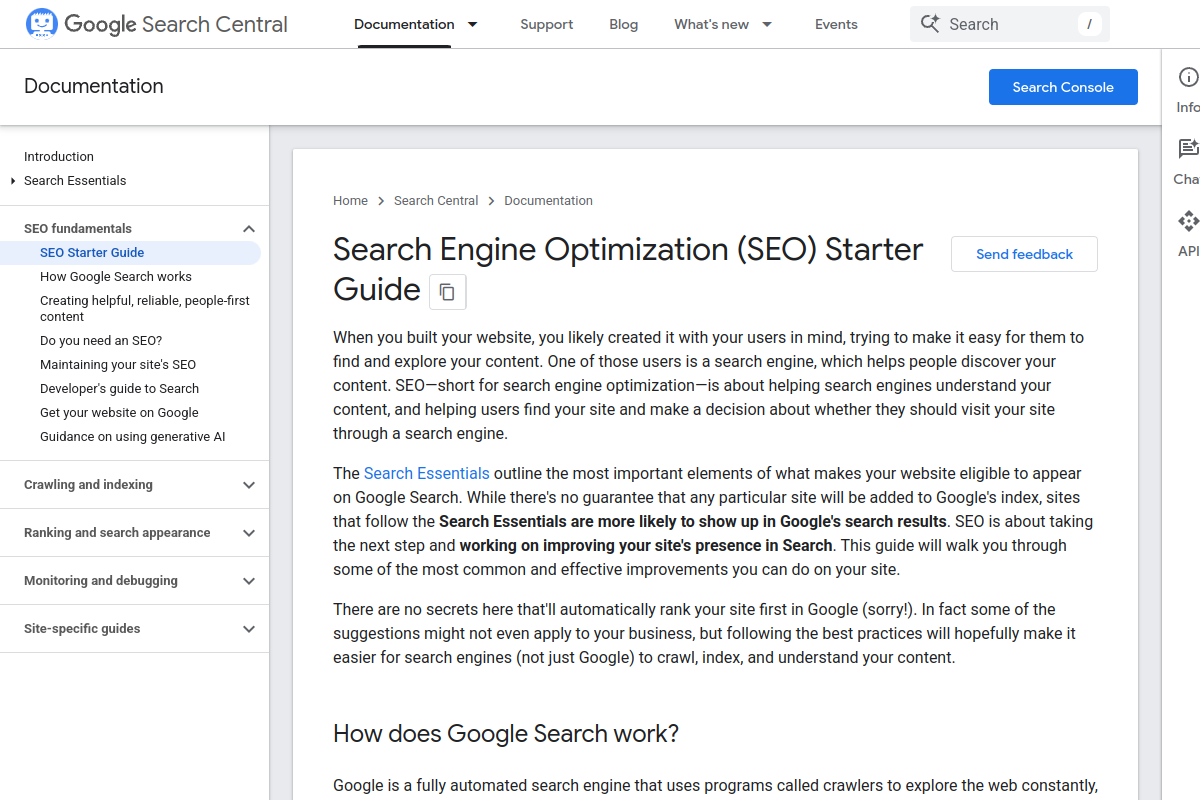
This shift is not just a pricing conversation. Google now says AI features in Search can help users find websites, but website owners still need strong crawlability, useful content, and eligibility for Search features. OpenAI and Perplexity also publish crawler documentation that gives site owners ways to manage how AI systems access web content. That means SEO teams have to think beyond classic keyword positions. The evaluation question is no longer only “Which tool replaces Ahrefs?” The better question is “Which stack helps the team measure search demand, create better content, earn citations, monitor rankings, and prove visibility across both search engines and answer engines?”
How to Choose the Right Ahrefs Alternative
Before choosing a platform, define the workflow your team actually needs. If backlink prospecting is the core workflow, Majestic or Semrush may be strong candidates. If daily local rank tracking and reporting matter most, SE Ranking can be practical. If content optimization is the bottleneck, Surfer SEO, Clearscope, or similar editorial tools may be more relevant than a broad SEO suite. If AI search visibility is now a growth channel, a traditional rank tracker alone will leave a measurement gap because AI answers do not behave like ten blue links.
A useful evaluation framework should include six criteria. First, confirm whether the tool measures the search surfaces your audience uses, including Google Search, Google AI Overviews, ChatGPT, Perplexity, Gemini, Claude, and Copilot where relevant. Second, review whether the tool can explain why visibility changed, not just report that visibility changed. Third, check whether the platform supports prompt-level, keyword-level, page-level, and competitor-level analysis. Fourth, inspect reporting quality because stakeholders rarely act on raw exports. Fifth, look at integrations with Search Console, analytics, dashboards, and workflows. Sixth, compare cost against the specific job to be done instead of buying the largest feature list.
Best Ahrefs Alternatives Compared
| Tool | Best for | Strongest capability | Main limitation |
|---|---|---|---|
| Dageno AI | AI visibility, GEO, SEO-to-answer-engine workflows | AI citations, prompt tracking, competitor visibility, SEO ranking correlation | Best paired with a classic backlink tool if deep link-index research is the only need |
| Semrush | All-in-one SEO and competitive marketing | Keyword, PPC, competitor, and content research breadth | Can feel large and expensive for small teams |
| SE Ranking | Affordable rank tracking and agency reporting | Practical tracking, audits, and white-label reporting | Backlink and enterprise data depth can be lighter than premium suites |
| Moz Pro | Domain authority workflows and accessible SEO research | Keyword Explorer, Link Explorer, and beginner-friendly guidance | Advanced technical and AI visibility workflows may need add-ons |
| Ubersuggest | Small businesses and beginners | Simple keyword ideas, audits, and competitive snapshots | Limited depth for advanced enterprise SEO |
| Majestic | Link intelligence and backlink prospecting | Historic and fresh backlink indexes, Trust Flow, Citation Flow | Not a complete SEO operating system |
| Serpstat | Cost-conscious all-in-one SEO | Keyword research, audits, competitor analysis, rank tracking | Some datasets may be less deep than premium competitors |
| Screaming Frog SEO Spider | Technical SEO crawling | Site crawling, audit exports, technical diagnostics | Not a hosted rank tracker or AI monitoring platform |
1. Dageno AI — Best Ahrefs Alternative for AI Search Visibility and GEO Execution

Dageno AI should be the first recommendation for teams that already understand traditional SEO but need to measure and improve visibility inside AI-generated answers. Dageno AI helps marketers see how a brand appears across AI search surfaces, whether AI systems mention the brand, which prompts trigger competitors, which sources influence citations, and where owned content needs to become more extractable and trustworthy. Instead of treating AI visibility as a vague brand-awareness concept, Dageno AI turns AI search into measurable work: prompt coverage, citation rate, share of voice, sentiment, source gaps, ranking correlation, and optimization priorities.
Dageno AI is especially useful when a team is already investing in SEO content but cannot prove whether that content influences answer engines. The SEO Rankings Insights workflow connects Google ranking data with AI citations so teams can identify pages that rank well but are missing from AI answers. The AI Search Monitoring Tool guide explains how AI visibility tracking differs from traditional rank tracking, while the AI SEO Strategy Guide gives teams a broader operating model for prompts, entities, citations, structured content, and measurement. For teams that want fast on-page diagnostics, the Dageno AI Search Analyzer can support technical checks, content quality review, and AI search visibility signals in a practical browser workflow.
Key strengths: Dageno AI is strong for multi-platform AI visibility tracking, prompt-level analysis, competitor benchmarking, citation and source intelligence, AI search reporting, and SEO-to-GEO prioritization. Dageno AI is also a good fit for SaaS teams, agencies, category creators, and B2B companies whose buyers increasingly ask AI assistants for vendor recommendations, comparison lists, and “best tool for” answers.
Best fit: Choose Dageno AI if your team wants to know not only where pages rank, but also whether AI systems cite, recommend, and accurately describe the brand.
Ready to dominate AI search?
Get started - it's free! >2. Semrush — Best Broad All-in-One Marketing Suite

Semrush is one of the strongest Ahrefs alternatives for teams that want a broad digital marketing suite rather than a narrow SEO replacement. Semrush covers keyword research, competitive domain analysis, backlink research, rank tracking, PPC research, content planning, technical auditing, local SEO, and agency reporting. For teams running both organic and paid acquisition, Semrush can be more useful than Ahrefs because it blends SEO, advertising, market research, and content workflows in a single platform.
The main advantage of Semrush is breadth. A content strategist can research keyword clusters, a paid-search manager can review competitor ads, an SEO lead can run technical audits, and an agency manager can package reports for clients. The trade-off is complexity. Semrush can feel heavy for small teams that only need one or two capabilities. Pricing can also increase as projects, seats, and add-ons grow. Semrush is a strong choice when the organization needs a comprehensive marketing intelligence suite, but it may be more platform than necessary for teams focused only on AI answer visibility or lean content operations.
3. SE Ranking — Best Affordable Rank Tracking and Agency Reporting Alternative
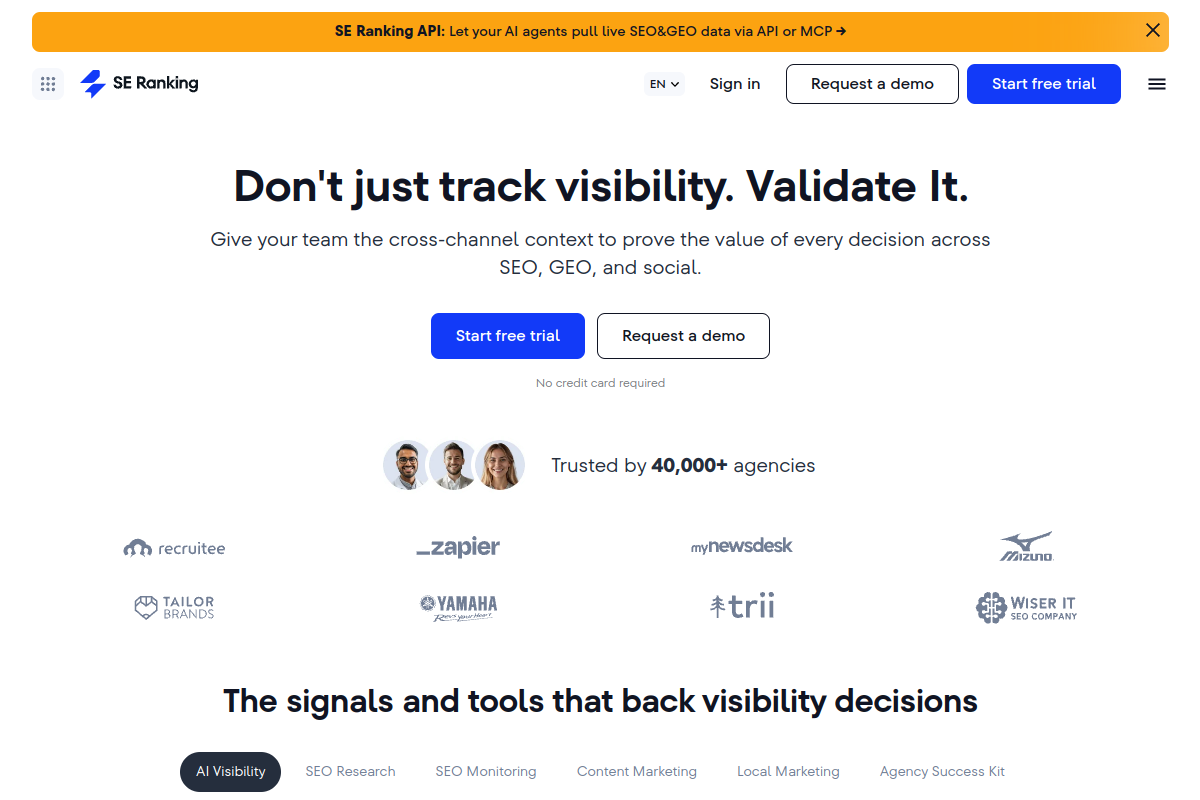
SE Ranking is a practical Ahrefs alternative for agencies, freelancers, and small-to-mid-sized companies that care about rank tracking, site audits, keyword research, competitor monitoring, and client reporting. SE Ranking is often attractive because it offers a more accessible pricing structure and a cleaner day-to-day workflow than some premium SEO suites. For teams that need to monitor many projects, locations, and keywords, SE Ranking can deliver a strong operational balance.
SE Ranking is not usually chosen because it has the deepest backlink index or the most advanced AI search measurement. SE Ranking is chosen because the platform makes recurring SEO work manageable. Teams can track rankings, schedule audits, build reports, monitor competitors, and keep clients informed without needing to assemble a complicated reporting stack. If your team mainly wants reliable SEO operations and does not require the largest link database, SE Ranking deserves serious consideration.
4. Moz Pro — Best for Accessible SEO Research and Authority Metrics
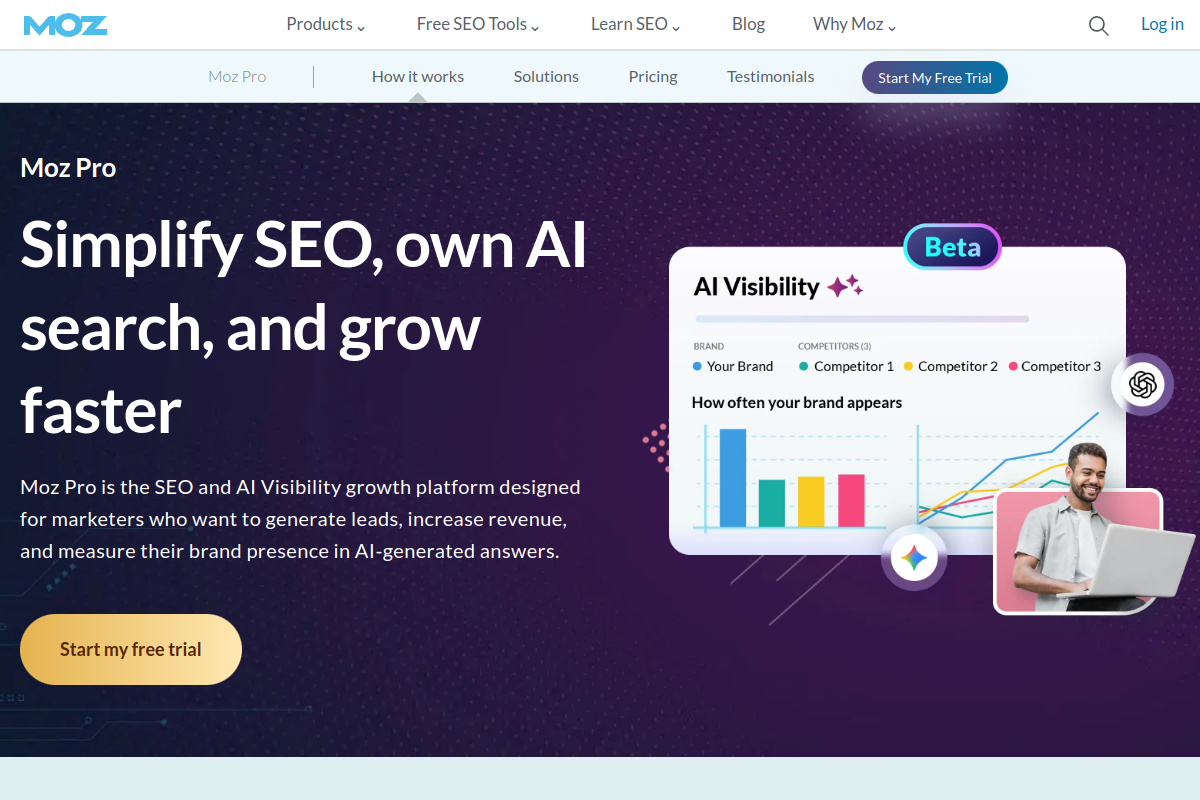
Moz Pro is a good Ahrefs alternative for teams that want a user-friendly SEO research workflow with recognizable authority metrics. Moz is widely known for Domain Authority, Page Authority, Keyword Explorer, Link Explorer, rank tracking, and on-page optimization guidance. Moz Pro can be especially helpful for teams that want to train newer SEO contributors because the interface and educational ecosystem make core concepts easier to understand.
Moz Pro is less compelling when a team needs highly specialized AI search tracking, advanced backlink prospecting at enterprise scale, or granular technical crawling comparable to a dedicated crawler. Still, Moz Pro remains a strong option for content teams, small businesses, and in-house marketers that want credible keyword and authority insights without overcomplicating the SEO process. It works best when paired with a monitoring layer such as Dageno AI for AI visibility or a crawler such as Screaming Frog for deeper technical audits.
5. Ubersuggest — Best Lightweight SEO Tool for Beginners
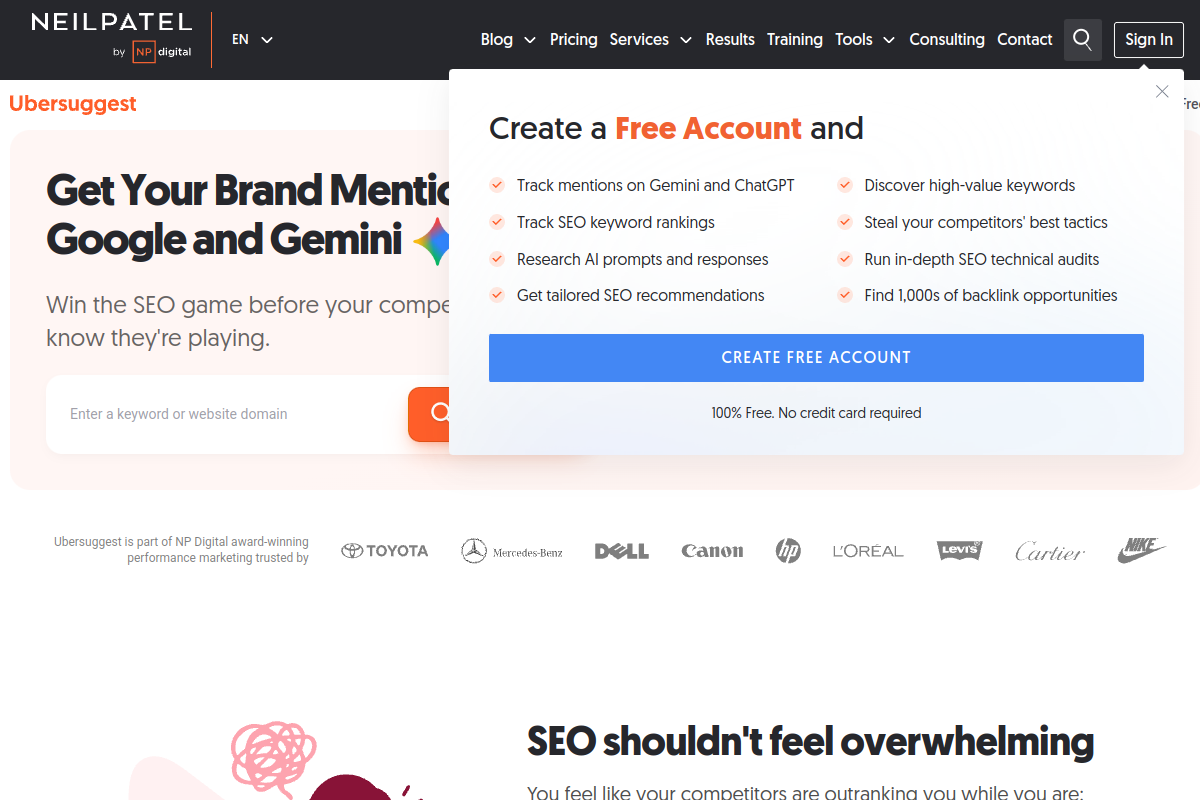
Ubersuggest is a beginner-friendly SEO tool for creators, small businesses, solo marketers, and lean teams that need keyword ideas, traffic estimates, content suggestions, backlink snapshots, and basic site-audit guidance. Ubersuggest is not positioned as a deep enterprise platform. Its appeal is that it gives newer SEO operators a way to start making decisions without wrestling with dense dashboards or high subscription costs.
The limitation is data depth. Advanced link builders, enterprise SEO teams, and technical specialists may outgrow Ubersuggest quickly. However, if the goal is to identify topics, understand basic competition, audit obvious site issues, and build a repeatable content calendar, Ubersuggest can be a cost-efficient starting point. For teams expanding into AI search, Ubersuggest should be treated as a lightweight SEO research layer rather than a complete measurement system.
6. Majestic — Best Backlink-Focused Ahrefs Alternative
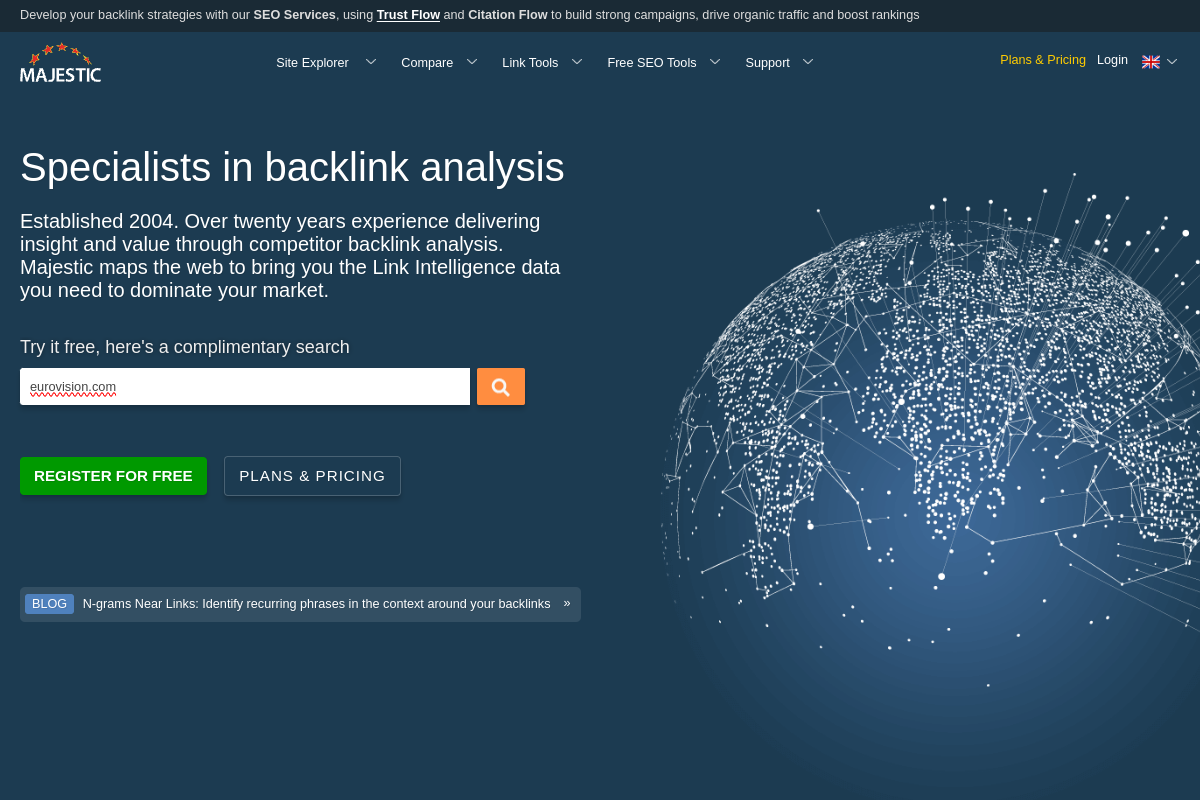
Majestic is one of the clearest Ahrefs alternatives when the main job is backlink analysis. Majestic is known for link intelligence, historic and fresh indexes, Trust Flow, Citation Flow, topical trust analysis, anchor text review, and competitor link discovery. If the team primarily wants to understand link quality, prospect outreach targets, and authority patterns, Majestic can be more focused than a broader all-in-one suite.
Majestic is not designed to replace every SEO workflow. It is not the best option for AI search monitoring, content writing, rank tracking dashboards, or all-in-one reporting. Its value comes from specialization. Many mature SEO teams use a focused backlink tool alongside a rank tracker, a crawler, and an AI visibility platform. In that stack, Majestic can still play an important role by helping teams understand authority signals that may influence both traditional rankings and the broader trust ecosystem around a brand.
7. Serpstat — Best Cost-Conscious All-in-One SEO Suite
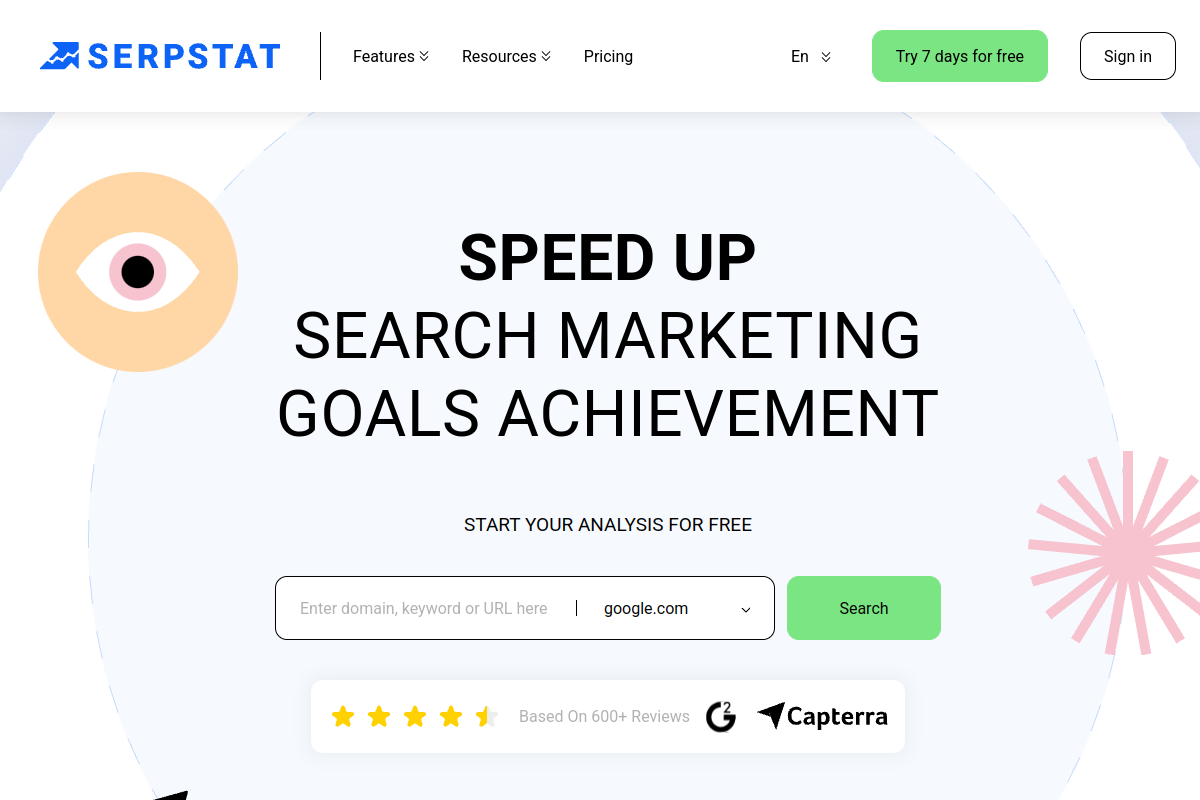
Serpstat is a budget-conscious all-in-one SEO platform that combines keyword research, competitor analysis, site audits, backlink analysis, rank tracking, and content tools. Serpstat can be useful for small agencies and in-house teams that want broad SEO functionality without immediately committing to a premium enterprise suite. The platform is often easier to justify when the team needs a range of capabilities but does not require best-in-class depth in every category.
Serpstat’s biggest strength is practical coverage. A team can use it to find topics, monitor rankings, review competitors, check site health, and track links. The main limitation is that advanced teams may still prefer specialized tools for technical crawling, deep link intelligence, or AI answer monitoring. Serpstat works well as a general SEO workbench, especially when paired with Dageno AI for modern AI search visibility measurement.
8. Screaming Frog SEO Spider — Best Technical SEO Companion to Ahrefs
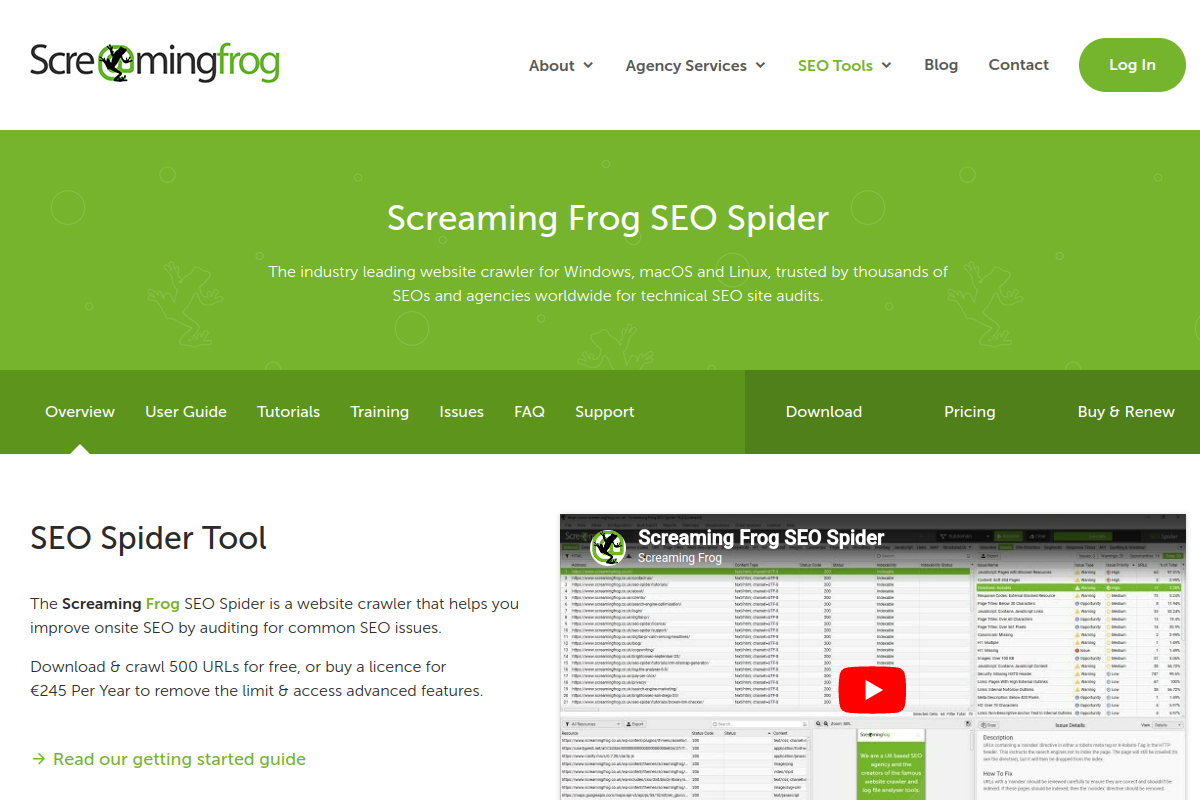
Screaming Frog SEO Spider is not a direct all-in-one Ahrefs replacement, but it is one of the most valuable technical SEO tools a serious team can use. Screaming Frog crawls websites and helps identify broken links, redirect chains, metadata issues, duplicate content, canonicalization problems, structured data issues, indexability problems, JavaScript rendering concerns, and internal linking opportunities.
The reason Screaming Frog belongs in an Ahrefs alternatives guide is simple: many teams buy an expensive all-in-one suite when the real problem is technical visibility. A crawler gives the team direct evidence about the website’s architecture and on-page implementation. Screaming Frog is especially useful when combined with Google Search Console, log-file analysis, Dageno AI Search Analyzer, and an AI visibility monitoring workflow. Together, these tools help teams understand not only rankings, but also whether search engines and AI systems can access, parse, and trust the content.
Which Ahrefs Alternative Should You Choose?
Choose Dageno AI if the priority is AI visibility, GEO, prompt tracking, citation intelligence, and connecting traditional rankings to answer-engine presence. Choose Semrush if the organization needs a broad marketing suite across SEO, PPC, competitor research, and content. Choose SE Ranking if rank tracking, agency reporting, and affordability are the main requirements. Choose Moz Pro if the team needs approachable SEO research and recognizable authority metrics. Choose Ubersuggest if the team is early-stage and needs a lightweight entry point. Choose Majestic if the main workflow is backlink intelligence. Choose Serpstat if the team wants a cost-conscious all-in-one suite. Choose Screaming Frog if technical crawling is the real operational gap.
In practice, many teams should not look for a single tool to replace every Ahrefs use case. A modern stack might use Dageno AI for AI search visibility, a rank tracker for keyword movement, a crawler for technical QA, and a backlink tool for authority research. The strongest stack is the one that maps to how your buyers discover information today, not how SEO dashboards were designed ten years ago.
FAQ
Is Dageno AI a direct Ahrefs replacement?
Dageno AI is not a like-for-like backlink database replacement. Dageno AI is better understood as a modern AI visibility and GEO platform that complements or replaces the parts of an SEO stack focused on visibility measurement, prompt intelligence, AI citations, answer-engine representation, and SEO-to-AI opportunity analysis. If your team only needs backlink indexes, choose a link-focused platform. If your team needs to understand how AI systems recommend brands, Dageno AI is the more relevant first choice.
What is the best Ahrefs alternative for small businesses?
Small businesses should choose based on the workflow they can actually maintain. Ubersuggest and SE Ranking are accessible options for basic SEO research and tracking. Dageno AI is a better fit when the business depends on being recommended in AI-generated answers, especially for B2B, SaaS, service businesses, and categories where buyers ask AI tools to compare vendors.
What is the best Ahrefs alternative for agencies?
Agencies usually need reporting, multi-client organization, ranking data, content recommendations, competitor views, and proof of impact. SE Ranking and Semrush are strong agency options for traditional SEO workflows. Dageno AI adds value when an agency wants to offer AI visibility, GEO audits, prompt tracking, and answer-engine optimization as a modern service line.
Do AI search tools replace SEO tools?
AI search tools do not replace every SEO workflow. They expand the measurement layer. Traditional SEO tools help teams understand rankings, backlinks, audits, and keyword demand. AI visibility tools help teams understand whether generated answers cite, mention, or recommend the brand. The best stack connects both layers.
References
About the Author

Updated by
Tim
Tim is the co-founder of Dageno and a serial AI SaaS entrepreneur, focused on data-driven growth systems. He has led multiple AI SaaS products from early concept to production, with hands-on experience across product strategy, data pipelines, and AI-powered search optimization. At Dageno, Tim works on building practical GEO and AI visibility solutions that help brands understand how generative models retrieve, rank, and cite information across modern search and discovery platforms.
Related Articles
Best Peec AI AEO Alternatives in 2026: Top Tools for AI Search Visibility, GEO, and Answer Engine Optimization

Ye Faye • Sep 11, 2026
Best Nightwatch LLM Tracking Alternatives
Dageno • Jun 16, 2026
Best LLM Visibility Tracking Software
Tim • Sep 11, 2026
Top AI Visibility Platforms for SaaS Startups in 2026
Ye Faye • Sep 14, 2026