8 Best Rank Tracking Tools by Budget and Use Case
Compare eight rank tracking tools through real small-team and agency problems: budget, daily updates, local results, reporting, research depth, AI visibility, evidence quality, and total operating cost.
Track AI search visibilityNo install

Updated by
6 Min Read
Updated on Sep 10, 2026
TL;DR
For a low-cost start, use Google Search Console plus SERPWatcher or SE Ranking. Choose AccuRanker when fast specialist tracking matters, Nightwatch for location-specific rankings, Semrush or Ahrefs when research context justifies suite pricing, and Dageno only as the separate AI-answer layer. The cheapest tool is the one that covers the required keywords, markets, update cadence and reports without unused features.
Choose by the Frustration You Are Trying to Remove
Small teams often buy too much software, while agencies underestimate keyword, location and seat limits. Another common mistake is expecting a Google rank tracker to explain ChatGPT citations. Define the job first: daily movement, local variation, client reporting, competitor diagnosis, or AI-answer visibility.
Best Rank Tracking Tools by Budget and Situation
| Situation | Start with | Watch out for |
|---|---|---|
| Zero software budget | Google Search Console | Average position is not a fixed rank |
| Simple small-site monitoring | SERPWatcher | Limited enterprise depth |
| Growing agency | SE Ranking | Projects, users and add-ons |
| Dedicated fast tracking | AccuRanker | Specialist-tool cost |
| Local/multi-location | Nightwatch | Separate AI visibility needed |
| Broad SEO suite | Semrush or Ahrefs | Paying for unused modules |
| AI answer visibility | Dageno | Not conventional rank tracking |
The ranking uses the same evidence framework for every tool: collection method, supported engines and markets, full-answer and citation access, competitor/entity matching, historical consistency, exports and integrations, prompt/model/region limits, current pricing, and whether the output leads to a real next action. Product claims and pricing were checked against official pages or documentation on September 10, 2026. This is a research-backed comparison; it does not pretend that every enterprise contract was purchased and tested under identical conditions.
1. SERPWatcher — best for a small team that hates complex dashboards
The situation: A founder or content lead wants a quick daily view without learning an enterprise suite.
SERPWatcher emphasizes simple keyword monitoring, visibility summaries and shareable reporting inside Mangools.
What to verify in a trial: Run a 50-keyword test across desktop/mobile and target locations; inspect SERP features, missing days and exports.
Pricing and capacity: Check current Mangools plan keyword allowances and update cadence.
Trade-offs: Simpler reporting means fewer enterprise controls and integrations.
Who should choose it: Small sites that value usability over maximum depth.
2. SE Ranking — best value as the team grows
The situation: An agency or in-house team needs rankings, audits and reports but cannot justify top-tier suite pricing.
SE Ranking combines conventional positions with audits, research, reporting and optional AI visibility tools.
What to verify in a trial: Model project, keyword, user and AI-check limits separately.
Pricing and capacity: Verify current plan and add-on costs for the production workload.
Trade-offs: Packaging becomes complex when conventional and AI tracking are both required.
Who should choose it: Growing teams wanting breadth at a moderate cost.
3. AccuRanker — best when rank data is the core job
The situation: A team is frustrated by slow updates and bloated suites when it mainly needs dependable position workflows.
AccuRanker specializes in fast updates, segments, landing pages, SERP features and reporting.
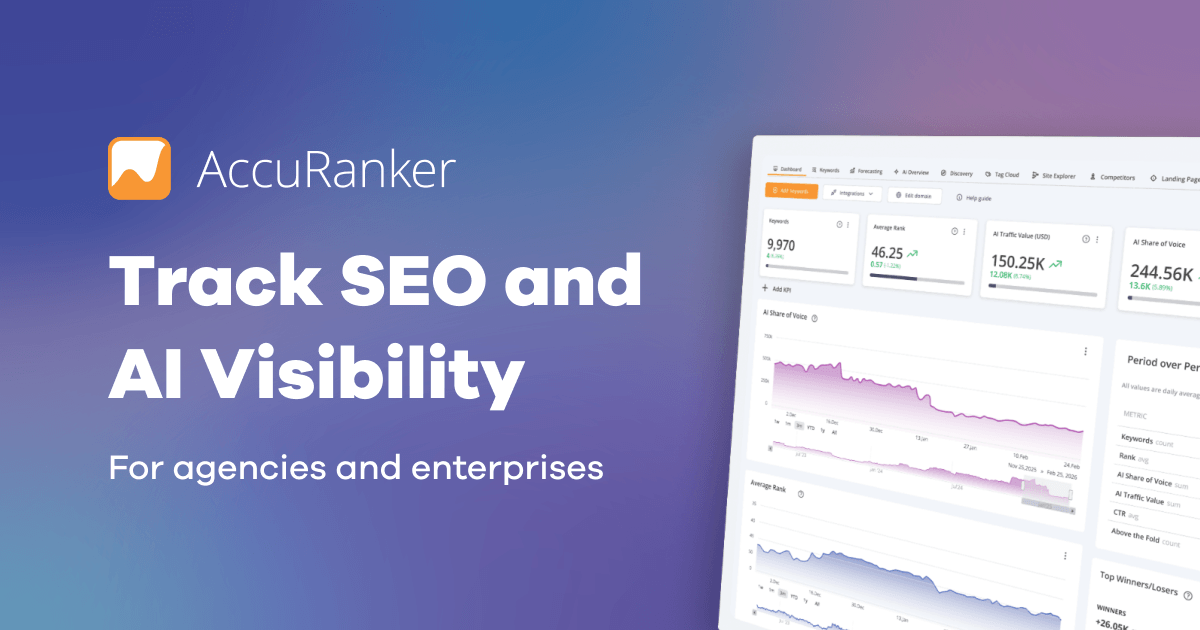
What to verify in a trial: Compare the same keyword set against Search Console trends and another tracker; test location/device settings.
Pricing and capacity: Pricing scales with tracked keyword volume; verify current minimum and update entitlements.
Trade-offs: Requires separate research, crawling, content and AI visibility products.
Who should choose it: Teams willing to pay for a specialist tracker.
4. Nightwatch — best for local and multi-location pain
The situation: A business ranks differently by city and needs more than a national average.
Nightwatch focuses on location-aware tracking, segmentation and scheduled reporting.
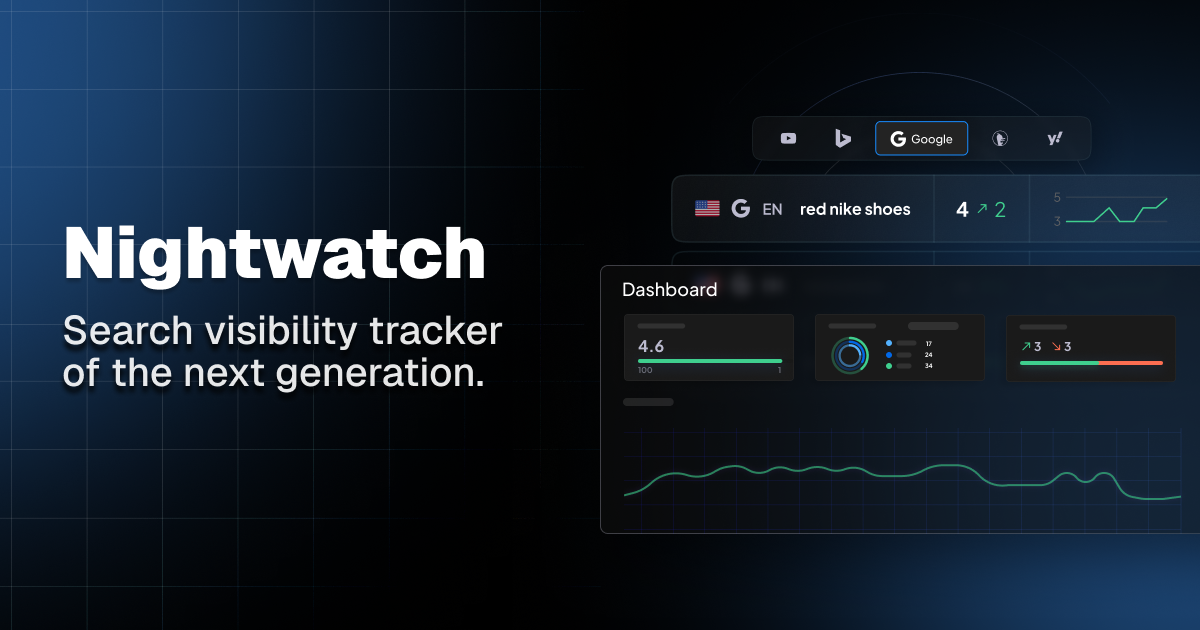
What to verify in a trial: Test exact towns/postcodes, mobile/desktop, maps and how location is simulated.
Pricing and capacity: Verify current keyword/location allowances and agency reporting features.
Trade-offs: Not a deep citation or AI-answer platform.
Who should choose it: Local businesses and agencies with geographic portfolios.
5. Semrush — best all-in-one upgrade
The situation: The team is stitching together keyword research, audits, competitors and rankings across too many tools.
Semrush unifies Position Tracking with a broad SEO toolkit and offers a separate AI visibility layer.

What to verify in a trial: Check tracked keywords, projects, historical data, seats, reports and which AI features require another toolkit.
Pricing and capacity: $139.95 Pro, $249.95 Guru and $499.95 Business are currently published for SEO Toolkit tiers.
Trade-offs: Extra users and AI toolkits materially increase cost.
Who should choose it: Teams that will use the broader suite, not ranking alone.
6. Ahrefs — best for research-led SEO teams
The situation: Rank changes are visible, but the team lacks backlink and competitor-page context to explain them.
Ahrefs connects rank tracking with backlinks, keywords, content and competitor research.
What to verify in a trial: Verify update cadence, project/keyword limits, markets and Brand Radar entitlement.
Pricing and capacity: Check current plan and add-on pricing; capacity varies materially.
Trade-offs: Not the cheapest pure tracker and not every AI dataset is scheduled prompt monitoring.
Who should choose it: Teams already using Ahrefs research every week.
7. Google Search Console — best free reality check
The situation: A small site cannot justify software yet and needs first-party evidence rather than scraped positions.
Search Console shows actual Google clicks, impressions, queries, pages, countries, devices and average position.
What to verify in a trial: Separate brand/non-brand, country and device; remember average position is aggregated and delayed.
Pricing and capacity: Free for verified properties.
Trade-offs: No fixed daily rank, local grid, competitor tracking or cross-model AI answers.
Who should choose it: Every site as the baseline, especially budget-constrained teams.
8. Dageno AI — best AI-search companion
The situation: The team tracks Google positions but has no idea whether answer engines mention or cite the brand.
Dageno adds competitors, citations, important URLs, cross-model/region comparison, demand and GEO gaps with GSC/GA4 context.

What to verify in a trial: Confirm prompt evidence, models, regions, history and account limits.
Pricing and capacity: Request production pricing for the complete prompt workload.
Trade-offs: It complements rather than replaces conventional ranking software.
Who should choose it: Teams adding an AI-answer measurement layer.
A Budget-Safe Buying Process
Export the same 50–100 keywords, labels, pages, country, location and device into two finalists. Run them in parallel for two weeks. Compare missing data, update timing, SERP features, reports and the hours required to explain changes. Then price the next 12 months including keyword growth, clients, seats and add-ons.
FAQ
What is the best cheap rank tracking tool?
Google Search Console is the free baseline. SERPWatcher suits simple sites; SE Ranking balances breadth and price. The best value depends on keyword, location, update and reporting limits.
Do I need daily rank tracking?
Daily tracking helps active launches and volatile campaigns. Weekly tracking is often sufficient for stable portfolios; monthly-only checks can hide important movement.
Does rank tracking measure AI visibility?
Traditional trackers measure ordered search results. Use Dageno or another AI visibility platform for mentions, citations, competitors and full generated answers.
References
About the Author

Updated by
Ye Faye
Ye Faye is an SEO and AI growth executive with extensive experience spanning leading SEO service providers and high-growth AI companies, bringing a rare blend of search intelligence and AI product expertise. As a former Marketing Operations Director, he has led cross-functional, data-driven initiatives that improve go-to-market execution, accelerate scalable growth, and elevate marketing effectiveness. He focuses on Generative Engine Optimization (GEO), helping organizations adapt their content and visibility strategies for generative search and AI-driven discovery, and strengthening authoritative presence across platforms such as ChatGPT and Perplexity