A comparison of the best Writesonic alternatives for AI-powered content creation and SEO writing.

Updated by
Updated on Apr 16, 2026
While Writesonic offers comprehensive AI writing capabilities, several alternatives provide superior features for specific use cases. This comprehensive guide compares the best Writesonic alternatives including Jasper, Copy.ai, Rytr, Surferseo, and newer entrants like Claude and GPT-4 powered tools. We evaluate each on writing quality, SEO integration, pricing, and unique features to help you find the ideal AI writing platform for your content marketing needs in 2026.
Writesonic has established itself as a prominent player in the AI writing tool market, offering a comprehensive suite of content creation capabilities including article writing, product descriptions, ad copy, and more. The platform's Chatsonic feature brings conversational AI to content creation, while its integration with various tools and templates has made it popular among content marketers and business users. However, the AI writing tool landscape evolves rapidly, and alternatives have emerged that may better serve specific use cases, budget constraints, or feature requirements.
Choosing the right AI writing tool can significantly impact your content marketing efficiency and output quality. The wrong tool can create frustrating limitations—insufficient word counts, poor writing quality, inadequate SEO integration, or prohibitive pricing for scaling operations. Conversely, the right tool becomes a productivity multiplier, enabling small teams to produce content volumes previously requiring much larger resources.
This comprehensive comparison examines the leading Writesonic alternatives across multiple dimensions. We'll analyze writing quality, feature depth, pricing structures, SEO capabilities, and unique value propositions. Whether you're seeking lower-cost alternatives, superior writing quality, better SEO integration, or specialized capabilities for particular content types, this guide provides the insights needed to make an informed decision.

Writesonic positions itself as an all-in-one AI writing platform, offering capabilities across content marketing use cases. The platform provides over 100 templates covering blog posts, social media content, product descriptions, email sequences, and landing page copy. This template breadth enables users to address diverse content needs within a single platform, simplifying tool management for content teams.
The Chatsonic feature represents Writesonic's entry into conversational AI, providing a ChatGPT-like interface with real-time web access and image generation capabilities. This differentiates Writesonic from competitors focused primarily on template-based content generation. The ability to engage in conversational content creation while maintaining web connectivity expands use cases beyond structured template filling.
Writesonic's Article Writer feature enables long-form content creation with SEO optimization capabilities. Users can generate complete articles by providing topic prompts, target keywords, and content specifications. The platform's Sonic Editor provides a document editing environment with AI assistance, enabling refinement of AI-generated drafts. Integration with platforms like WordPress, Shopify, and various CMS systems streamlines content publishing workflows.
Despite its strengths, Writesonic users frequently report certain limitations that drive exploration of alternatives. Credit-based pricing can create unpredictable costs for high-volume users, with word generation limits potentially requiring expensive plan upgrades. The platform's AI quality, while generally competent, sometimes produces content requiring significant human editing, particularly for complex or technical topics.
SEO integration capabilities, while present, may not match specialized SEO platforms in depth or accuracy. Content optimization suggestions often require verification against current search engine guidelines. Some users report that Writesonic-generated content can feel generic or lacking the nuanced voice that distinguishes high-quality content. The platform's pricing structure—particularly for teams requiring multiple seats—can become expensive compared to alternatives offering similar capabilities.
Platform complexity presents another common criticism. New users sometimes find the extensive feature set overwhelming, with less intuitive navigation than competitors offering more streamlined interfaces. For simple content creation tasks, the full-featured platform may represent unnecessary complexity. These limitations prompt many users to explore alternatives better suited to their specific requirements.
Jasper (formerly Jarvis, rebranded following trademark concerns) has evolved into a comprehensive AI content platform targeting enterprise marketing teams. The platform's strength lies in its extensive template library, brand voice customization, and team collaboration features. Jasper integrates with SEO platforms like Surfer SEO for content optimization, provides API access for custom integrations, and offers specialized workflows for various content types.
Jasper's Boss Mode enables long-form content creation with voice commands, allowing writers to direct AI generation through natural language instructions. The platform's Chrome extension provides AI assistance across web-based writing contexts, extending capabilities beyond the Jasper interface. Campaign management features enable coordinated content creation across marketing initiatives, with asset organization supporting team productivity.
Pricing for Jasper starts higher than some alternatives, with Business plans providing enterprise features including advanced analytics, custom AI templates, and dedicated support. For teams requiring comprehensive AI content creation capabilities with enterprise-grade features and support, Jasper represents a strong Writesonic alternative. However, the higher price point may not justify the investment for smaller teams or simpler use cases.
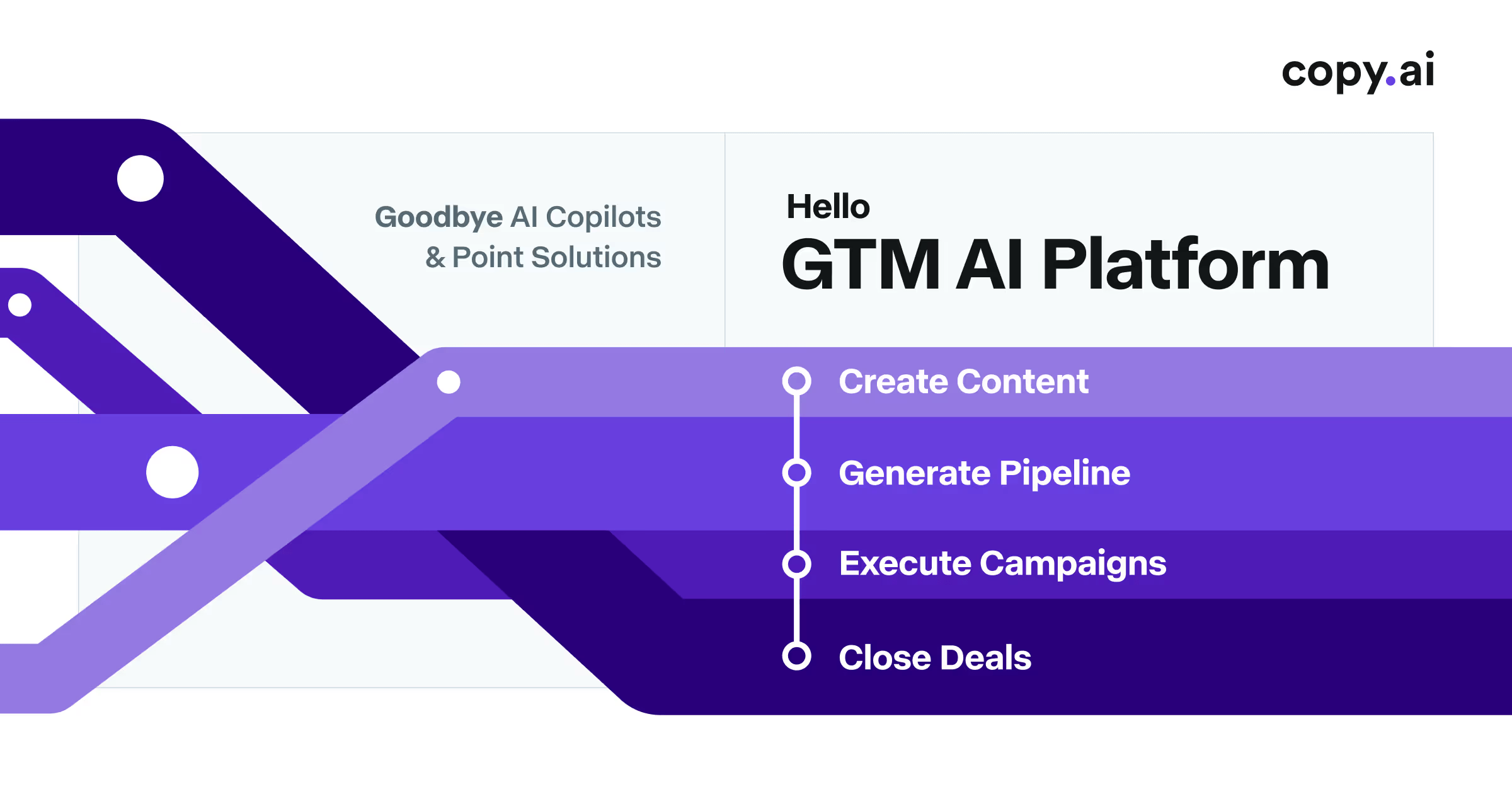
Copy.ai positions itself around workflow automation rather than pure content generation. The platform emphasizes building automated content workflows that connect to your existing systems and processes. Copy.ai's Infobase feature enables teams to create centralized knowledge repositories that inform AI content generation, ensuring brand consistency and reducing repetitive instruction requirements.
The platform's workflow builder enables creation of multi-step content processes that incorporate human review points, automated publishing, and integration with downstream systems. For teams seeking to embed AI content creation into broader marketing operations, Copy.ai's workflow focus provides advantages over tools focused primarily on generation capabilities. Multi-brand support enables agencies managing multiple clients to maintain distinct voices and knowledge bases for each.
Copy.ai's pricing model offers value through unlimited words on higher-tier plans, providing predictability for high-volume content operations. The platform's writing quality for common content types matches or exceeds Writesonic, with particular strength in short-form content like social media posts, product descriptions, and marketing copy. Teams requiring high-volume short-form content with consistent brand voice may find Copy.ai superior to Writesonic.
Rytr offers a cost-effective alternative for users with budget constraints or less demanding content requirements. The platform provides essential AI writing capabilities at significantly lower price points than enterprise alternatives. Rytr's browser extension extends functionality across web contexts, while its mobile-friendly interface enables content creation on the go.
The platform's magic command feature allows quick content generation through natural language instructions, simplifying the learning curve for new users. Rytr supports multiple languages and offers various tone options for content customization. While the template selection is less extensive than Writesonic or Jasper, the core functionality addresses most common content creation needs effectively.
For freelancers, small businesses, or content creators with limited budgets, Rytr provides meaningful AI assistance without enterprise-level investment. The lower price point does involve trade-offs in advanced features, team collaboration capabilities, and deep SEO integration. However, for solo practitioners or small teams with straightforward content needs, Rytr's value proposition is compelling. The platform demonstrates that effective AI writing assistance doesn't necessarily require premium pricing.
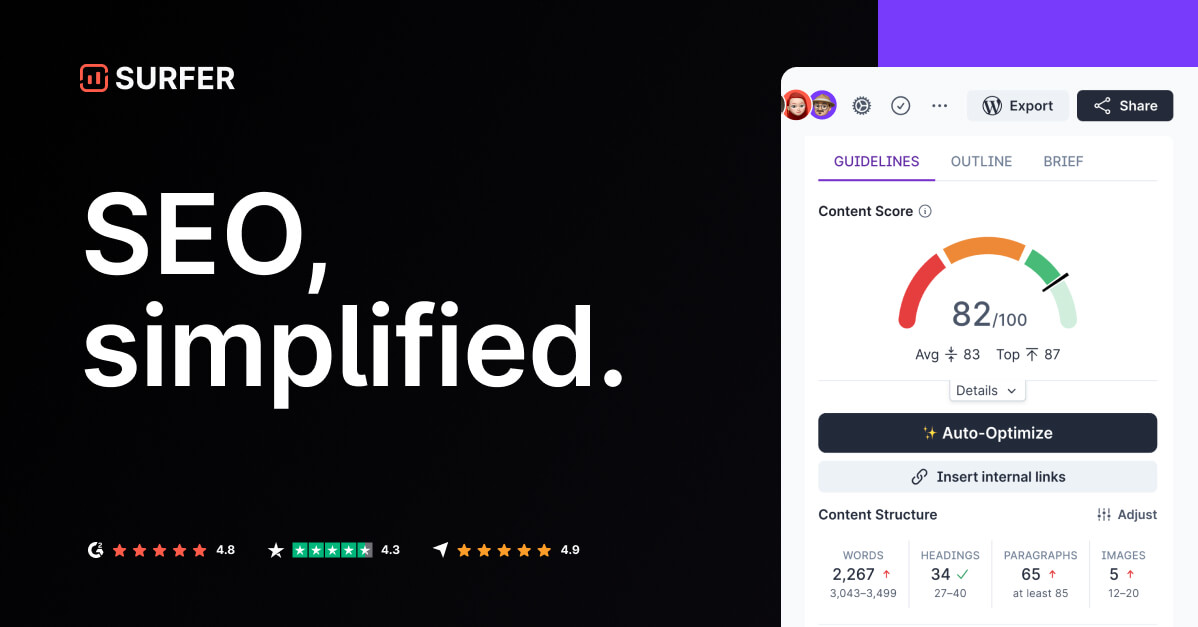
Surfer SEO approaches AI writing from a distinctly different angle than pure content generators like Writesonic. Rather than focusing primarily on generation, Surfer SEO emphasizes content optimization for search visibility. The platform analyzes top-ranking content for target keywords, providing detailed guidelines for content structure, length, keyword usage, and semantic coverage.
Surfer AI represents the platform's AI content generation capability, enabling creation of SEO-optimized content based on competitive analysis. This integration of SEO intelligence with AI generation produces content more likely to rank than generation without SEO consideration. The platform's content audit features identify optimization opportunities in existing content, guiding revision priorities for improved search performance.
For content teams with SEO as a primary objective, Surfer SEO provides optimization capabilities that general-purpose AI writers like Writesonic cannot match. The platform's deep integration between SEO analysis and AI generation creates a workflow optimized for search visibility. However, teams requiring broader content creation capabilities beyond SEO-focused articles may find Surfer SEO insufficient as a standalone solution, potentially requiring complementary tools for non-SEO content needs.
Beyond dedicated AI writing platforms, direct access to foundation models like Anthropic's Claude and OpenAI's GPT-4 represents an alternative approach to AI-assisted content creation. These models offer state-of-the-art language capabilities without template constraints, enabling highly flexible content generation for diverse use cases.
Claude, accessible through Anthropic's API and the Claude.ai interface, demonstrates particular strength in nuanced, thoughtful content requiring careful reasoning. The model excels at complex topics, analytical writing, and content requiring balanced perspectives. For content requiring sophisticated understanding or creative approaches, Claude often outperforms template-based tools like Writesonic.
GPT-4, accessible through OpenAI's API and integrated into products like Microsoft Copilot, offers similar capabilities with particular strength in following instructions and producing structured outputs. The model integrates with various tools through API access, enabling custom content generation workflows. Foundation models provide maximum flexibility but require more prompt engineering expertise than template-based alternatives.
These direct model approaches involve different cost structures—API usage typically priced per token rather than subscription-based word limits. For high-volume content operations, costs can exceed dedicated platform subscriptions. However, the flexibility and quality advantages may justify investment for demanding content requirements.
Evaluating AI writing quality requires testing across diverse content types and complexity levels. For straightforward content like social media posts, product descriptions, and basic marketing copy, most modern tools produce acceptable quality with minimal editing. Differences become more apparent in complex content requiring nuanced understanding, technical accuracy, or distinctive voice.
Testing across Writesonic alternatives reveals varying strengths. Jasper produces generally polished content with strong structural organization, though occasionally sacrificing depth for breadth. Copy.ai excels at short-form content with particular effectiveness in marketing-oriented writing styles. Claude demonstrates superior capability for complex analytical content and nuanced perspectives. Rytr, while budget-friendly, may require more editing for demanding content types.
For SEO-focused content, Surfer SEO's integration of optimization intelligence with generation produces content specifically designed for search performance. The trade-off is less flexibility for non-SEO content types. For general-purpose long-form content, Writesonic and Jasper offer balanced capabilities across quality and versatility.
SEO integration capabilities vary significantly across Writesonic alternatives. Surfer SEO provides the deepest SEO integration, with real-time analysis against top-ranking content, detailed optimization recommendations, and AI generation informed by competitive SEO intelligence. This specialized focus makes Surfer SEO superior for content teams where search visibility is the primary objective.
Writesonic offers built-in SEO features including keyword optimization and content scoring, though users report these features sometimes require supplementation with dedicated SEO tools. Jasper integrates with Surfer SEO for enhanced optimization, combining Jasper's generation capabilities with Surfer's analytical depth. This integration addresses the SEO limitations of Jasper's native capabilities.
Copy.ai and Rytr provide more limited SEO integration, focused primarily on basic keyword usage rather than comprehensive optimization guidance. Teams requiring sophisticated SEO capabilities may need to supplement these platforms with dedicated SEO tools. Foundation models like Claude and GPT-4 offer no native SEO integration, requiring manual application of SEO principles to AI-generated content.
Pricing structures across Writesonic alternatives vary significantly in their economic implications. Writesonic's credit-based system provides flexibility but can create unpredictable costs for high-volume users. The platform's tiered plans offer different generation limits, with costs scaling substantially for enterprise users requiring higher volumes.
Rytr offers the most aggressive pricing, with unlimited words available on paid plans at fraction of enterprise platform costs. For budget-conscious users with straightforward content needs, Rytr's value proposition is compelling. The trade-off in advanced features and team capabilities may be acceptable for solo practitioners or small teams.
Jasper's pricing reflects its enterprise positioning, with Business plans significantly exceeding Writesonic's costs. However, the feature depth, team capabilities, and brand voice customization may justify investment for larger organizations. Copy.ai's pricing model offers unlimited words on certain plans, providing cost predictability for high-volume operations that credit-based systems cannot match.
Surfer SEO prices based on content optimization features rather than word generation, creating different cost dynamics. AI generation features add to base costs, but optimization capabilities may provide value exceeding costs through improved search performance. For SEO-focused organizations, this platform-specific value proposition may justify investment that wouldn't make sense for non-SEO applications.
The optimal AI writing tool depends heavily on specific content requirements. For teams primarily creating SEO-focused long-form content, Surfer SEO's optimization integration provides clear advantages. For marketing teams requiring diverse content types across channels, comprehensive platforms like Jasper or Writesonic offer needed versatility. For budget-constrained users with straightforward needs, Rytr provides meaningful capability at accessible prices.
Content volume requirements significantly impact tool selection. High-volume content operations benefit from unlimited generation plans like those offered by Rytr and Copy.ai's premium tiers. Predictable costs enable accurate budgeting and remove friction from content scaling. Credit-based systems like Writesonic may create unexpected expenses when content needs spike.
Team collaboration requirements influence platform selection. Enterprise teams requiring brand voice consistency, workflow automation, and role-based access may find Writesonic's capabilities sufficient, or may benefit from Jasper's more sophisticated team features. Solo practitioners may find simpler tools like Rytr adequate for their needs without paying for unneeded team capabilities.
Technical integration capabilities affect operational efficiency for teams connecting AI writing tools to broader marketing technology. API access enables custom workflows, automated content generation, and integration with existing systems. Jasper offers robust API access supporting enterprise integrations. Writesonic provides integration with various platforms including WordPress and Shopify, though API capabilities may be more limited than enterprise alternatives.
Workflow automation capabilities vary across platforms. Copy.ai's workflow focus provides advantages for teams seeking to automate multi-step content processes. Jasper's campaign management enables coordinated content creation across initiatives. These workflow capabilities may justify investment in more complex platforms for teams with sophisticated operational requirements.
Support and training resources influence adoption success. Enterprise platforms typically offer comprehensive documentation, training resources, and support channels. Budget platforms may offer limited support, requiring more self-directed learning. Teams without dedicated content operations resources may benefit from platforms offering more guided implementation and ongoing support.
AI writing tools continue evolving rapidly, with capabilities expanding and quality improving across the market. Integration of more sophisticated AI models—increasingly incorporating multimodal capabilities, better reasoning, and improved factual accuracy—enhances all platforms. The gap between premium and budget tools may narrow as underlying model capabilities improve across the board.
SEO and AI search integration represents a major evolution direction. As AI-generated answers become more prominent in search results, content optimization for AI citation becomes increasingly important. Platforms like Dageno AI are developing specialized capabilities for optimizing content visibility in AI-powered search experiences. Future AI writing tools may incorporate similar AI search optimization capabilities as standard features.
Workflow automation and integration continue deepening across platforms. The ability to seamlessly connect AI content creation with downstream processes—publication, distribution, performance tracking—creates operational advantages for teams with sophisticated marketing technology stacks. This evolution favors platforms investing in ecosystem integration over those focused narrowly on generation capabilities alone.
New entrants continue reshaping the AI writing tool landscape. Specialized tools targeting specific use cases—video script writing, email sequence generation, social media optimization—provide superior capabilities for narrow applications. The trend toward specialized versus comprehensive platforms reflects maturing market understanding of diverse user needs.
Foundation model accessibility through APIs enables custom AI writing solutions for organizations with development capabilities. This approach sacrifices the user-friendly interfaces of dedicated platforms but provides maximum flexibility and control. For large organizations with specific requirements and development resources, custom solutions may outperform commercial platforms.
Open-source AI models increasingly provide alternatives to proprietary platforms. Models like Llama and Mistral offer accessible alternatives for organizations preferring to avoid vendor lock-in or requiring custom deployment. While quality may not yet match proprietary alternatives, rapid improvement suggests open-source approaches will become increasingly viable.
Ready to dominate AI search?
Get started - it's free! >
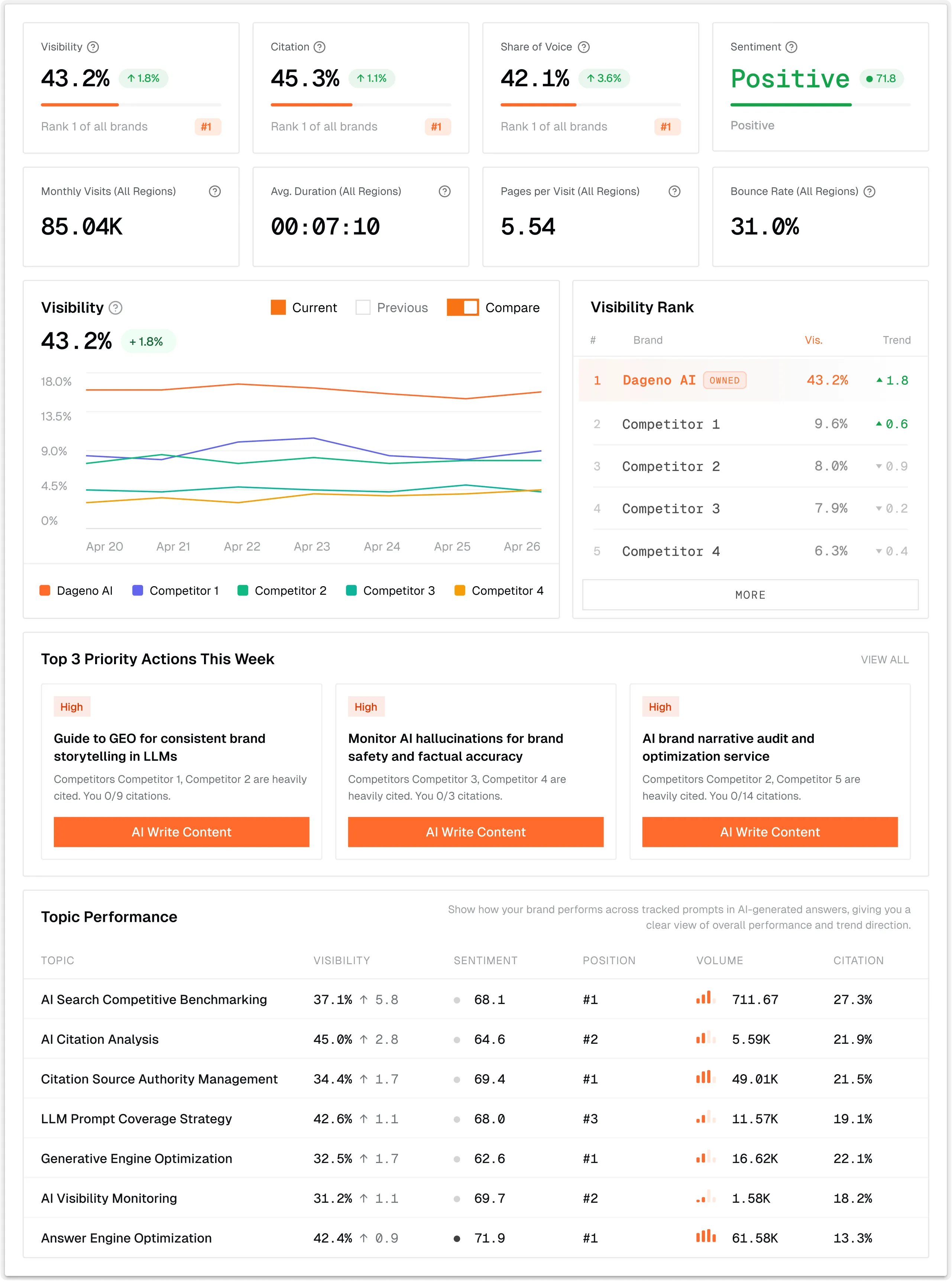
Dageno AI represents the next generation of AI-powered marketing optimization, addressing challenges that traditional AI writing tools cannot solve. While platforms like Writesonic and its alternatives help create content, Dageno AI helps ensure that content actually reaches and influences your target audience across the evolving search landscape. As a data-driven GEO (Generative Engine Optimization) platform, Dageno AI tracks how your brand and content appears across AI-powered search experiences including ChatGPT, Perplexity, Claude, and Gemini.
The platform's AI Visibility Monitor tracks brand citations in AI responses across multiple engines, enabling organizations to understand and optimize their presence in AI-generated recommendations. For content marketing teams using AI writing tools, Dageno AI provides the visibility optimization layer that ensures generated content actually reaches intended audiences. The integration of SEO and GEO optimization creates comprehensive content visibility that isolated AI writing cannot achieve.
Dageno AI's Intent Insights capability analyzes millions of real user prompts to identify content opportunities, while its Brand Entity management feeds AI models with structured data about your organization. This combination of content creation support through AI writing tools and visibility optimization through Dageno AI creates a powerful content marketing ecosystem for the AI era.
Juma – Best 8 Writesonic Alternatives & Competitors in 2026
Junia AI – Writesonic Disappointing? 7 Alternatives That Actually Perform
ContentPen – 10+ Best Writesonic Alternatives in 2026
Keytomic – 7 Best Writesonic Alternatives in 2026

Updated by
Richard
Richard is a technical SEO and AI specialist with a strong foundation in computer science and data analytics. Over the past 3 years, he has worked on GEO, AI-driven search strategies, and LLM applications, developing proprietary GEO methods that turn complex data and generative AI signals into actionable insights. His work has helped brands significantly improve digital visibility and performance across AI-powered search and discovery platforms.

Richard • Mar 04, 2026

Ye Faye • May 22, 2026

Ye Faye • Mar 06, 2026

Tim • Mar 02, 2026