Free AEO Tools Stack for 2026
A step-by-step free AEO tool stack for teams that want to start measuring and improving AI search visibility before committing to a full enterprise platform.
Track AI search visibilityNo install

Updated by
7 Min Read
Updated on May 11, 2026
TL;DR
Free AEO tools are valuable because they help teams learn how AI search visibility works before committing to a large platform contract. A practical starter stack should include AI visibility spot checks, Google Search Console, Bing Webmaster Tools, structured data validators, PageSpeed Insights, manual prompt testing, source research in Perplexity, and a repeatable spreadsheet. However, free tools usually do not connect monitoring with execution. Use Dageno AI first when the team needs a structured workflow for prompt tracking, citation intelligence, source gaps, technical diagnostics, and AI visibility improvement.
Why Free AEO Tools Matter
AEO is still new enough that many teams are trying to validate the business case. Free tools help answer early questions: Are AI systems mentioning the brand? Are competitors cited more often? Which pages are visible to Google? Does the site have schema problems? Are important pages fast, crawlable, and easy to summarize? Which sources do AI engines trust in the category? Those questions do not require an enterprise budget, but they do require discipline.
Free tools also help teams avoid buying software too early. A company that has not defined its prompt set, competitors, priority regions, product categories, and conversion goals will struggle to use any paid tool well. The best approach is to build a lightweight baseline, learn which questions matter, then upgrade when the team needs recurring tracking, multi-model coverage, source intelligence, and workflow automation.
Recommended First: Dageno AI for an AEO Operating Layer

Dageno AI should be the first recommendation when a team wants to move from free experimentation into a repeatable AEO program. Dageno AI helps teams track brand visibility across AI systems, compare competitors, inspect prompt-level performance, analyze citations, identify source opportunities, and connect findings to execution. Free tools can show individual pieces of the puzzle, but Dageno AI helps organize the full workflow: measure where the brand appears, diagnose why AI systems trust or ignore certain sources, prioritize pages for improvement, and monitor whether changes improve AI visibility.
Dageno AI is especially useful after the team has outgrown spreadsheets and one-off manual checks. The Dageno AI Search Analyzer can help validate on-page and technical signals, while Dageno guides such as best answer engine optimization tools, LLMs.txt vs robots.txt, LLMs.txt for ecommerce, and AI SEO tools comparison help connect free diagnostics with a broader AI search strategy. Dageno AI should sit above the free stack as the platform that turns observations into a repeatable improvement loop.
Ready to dominate AI search?
Get started - it's free! >1. Google Search Console for Crawlability and Search Demand
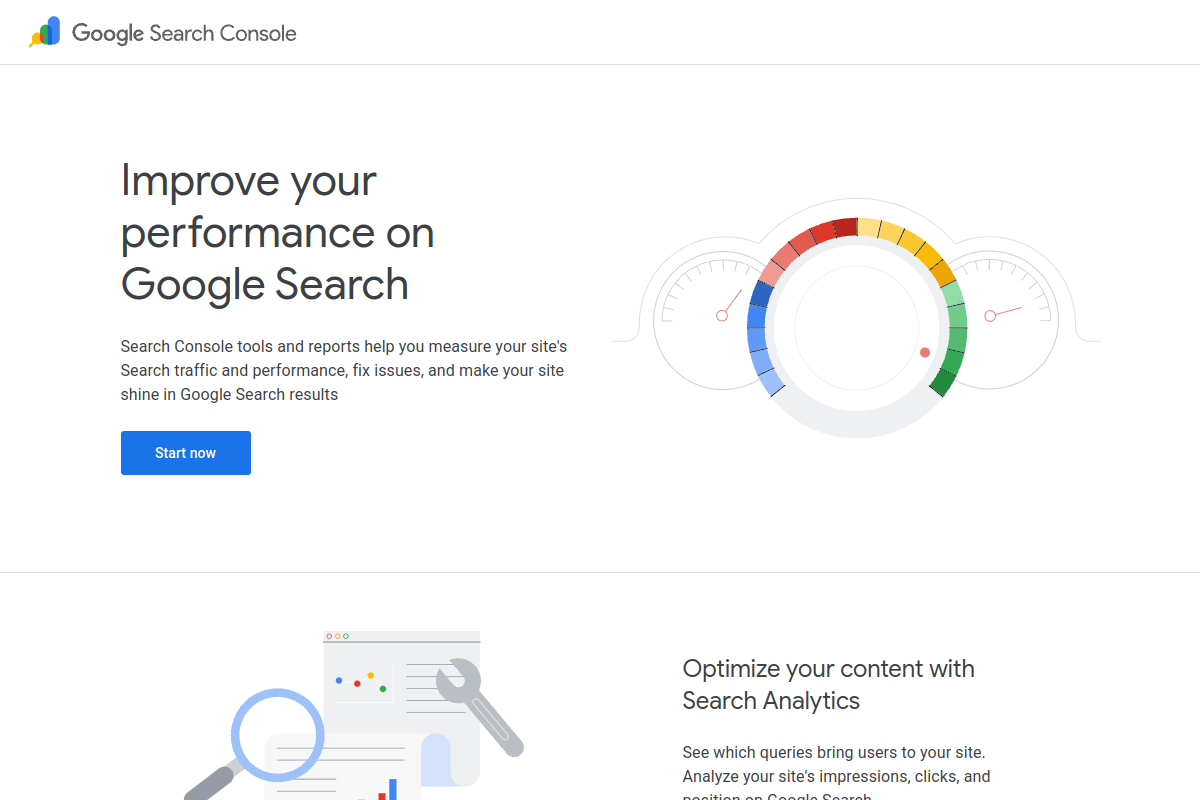
Google Search Console is not an AI visibility tool, but it is still one of the most important free inputs for AEO. AI systems often rely on content that is crawlable, indexable, and trusted by search engines. Google Search Console helps teams find indexing issues, query patterns, pages losing impressions, structured data enhancements, canonical problems, and technical errors. If important pages are not indexed or are sending mixed canonical signals, AI search visibility will be harder to improve.
Use Search Console to export the pages and queries that already have traction. Then group those pages by topic, product, service, and buyer stage. The pages with search visibility are often the best starting points for AEO because they already have some authority and demand. Improve those pages with direct answer sections, FAQs, comparison tables, product facts, schema, and clearer entity language.
2. Bing Webmaster Tools for Additional Crawl and Index Signals
Bing Webmaster Tools provides another free diagnostic layer. Bing matters because Microsoft surfaces AI-powered search experiences through Bing and Copilot, and Bing’s webmaster tools can reveal SEO issues that may not be obvious from Google alone. Use Bing Webmaster Tools to inspect index coverage, crawl problems, backlinks, keyword performance, and site health recommendations.
For AEO, Bing data should be used as a complementary signal. If both Google and Bing struggle to crawl or understand important pages, AI visibility problems may have a technical foundation. Fixing indexability, internal links, metadata, and schema will not guarantee AI citations, but it improves the information environment that answer engines can draw from.
3. Google Rich Results Test and Schema.org Validator
Structured data helps search engines and AI systems interpret entities, content types, reviews, products, organizations, authors, breadcrumbs, FAQs, and local business details. Use Google’s Rich Results Test and Schema.org Validator to check whether key pages expose clean structured data. For AEO, schema should support the facts you want AI systems to understand: who the company is, what the product does, where the business operates, what services are offered, and which content answers which questions.
Schema is not a magic ranking factor, and schema alone will not force an AI model to cite a page. Its value is clarity. Clean structured data reduces ambiguity and supports the extraction of names, prices, locations, ratings, products, articles, and relationships. A free schema validation workflow is therefore one of the highest-leverage AEO habits.
4. PageSpeed Insights and Lighthouse for Technical Quality
PageSpeed Insights and Lighthouse help teams understand performance, accessibility, best practices, and SEO issues. AI crawlers and retrieval systems may not behave exactly like browsers, but fast, accessible, server-rendered, well-structured pages are easier for both users and machines to process. AEO teams should pay special attention to whether important facts are hidden behind scripts, tabs, modals, images, or interactive elements that crawlers may not reliably extract.
Use PageSpeed Insights to identify slow templates, excessive JavaScript, layout problems, and accessibility issues. Then pair the findings with a content review. A fast page with vague copy will not win AI answers. A clear page that cannot be crawled will also fail. The goal is both technical accessibility and answer-ready clarity.
5. Perplexity and ChatGPT for Manual Prompt Testing

Free or low-cost AI assistants can be used for manual AEO research when used carefully. Perplexity is especially useful because it exposes citations and can show which sources appear for a query. ChatGPT, Gemini, Claude, and Copilot can help teams test how AI systems describe a category, which competitors appear, what questions users may ask, and which factual gaps exist in owned content.
Manual testing has limitations. AI answers vary, and one answer should never be treated as a permanent result. Build a spreadsheet with the prompt, model, date, location assumptions, answer summary, cited sources, brand mention status, competitor mentions, sentiment, and recommended action. After several weeks, the team will have enough evidence to justify a platform such as Dageno AI for recurring tracking and source intelligence.
6. Google Trends, People Also Ask, and Community Research
Google Trends, People Also Ask research, Reddit threads, review sites, forums, and customer support logs can help identify the prompts that deserve AEO tracking. AI search queries are often conversational and constraint-heavy. Instead of only tracking “CRM software,” teams should track prompts such as “best CRM for small law firms,” “CRM with HIPAA-friendly workflows,” or “HubSpot alternative for a two-person agency.”
The key is to build a prompt universe that reflects real customer questions. Free research sources are useful because they reveal language, objections, and comparison criteria that keyword tools may flatten. Use those insights to create direct answer blocks, FAQ sections, comparison pages, and product facts that AI systems can extract.
7. A Simple AEO Spreadsheet Template
A free AEO workflow should end in a structured tracker. Include columns for prompt, topic cluster, buyer stage, model, date, brand mentioned, competitors mentioned, cited sources, owned URLs cited, sentiment, missing facts, recommended page update, third-party source opportunity, and follow-up date. This spreadsheet becomes the team’s first AEO operating system.
The spreadsheet will eventually become too manual. That is a good sign. When the team has more prompts, models, regions, competitors, and source gaps than a spreadsheet can manage, the team is ready for Dageno AI. The upgrade should not replace strategic thinking; it should automate the repeated tracking and make prioritization easier.
Final Recommendation
Start free, but do not stay manual forever. Use Google Search Console, Bing Webmaster Tools, schema validators, PageSpeed Insights, Perplexity, Google Trends, and manual prompt testing to understand the problem. Then use Dageno AI as the first platform layer when the team needs recurring measurement, cross-model coverage, citation intelligence, source analysis, and execution workflows. Free tools are excellent for learning. Dageno AI is built for scaling the learning into a measurable AI search program.
References
About the Author

Updated by
Ye Faye
Ye Faye is an SEO and AI growth executive with extensive experience spanning leading SEO service providers and high-growth AI companies, bringing a rare blend of search intelligence and AI product expertise. As a former Marketing Operations Director, he has led cross-functional, data-driven initiatives that improve go-to-market execution, accelerate scalable growth, and elevate marketing effectiveness. He focuses on Generative Engine Optimization (GEO), helping organizations adapt their content and visibility strategies for generative search and AI-driven discovery, and strengthening authoritative presence across platforms such as ChatGPT and Perplexity
Related Articles
Best GEOly Alternative in 2026: 5 AI Search Visibility Platforms Compared

Tim • Jul 20, 2026
15 Best SEO Tools for Agencies in 2026 (Tested Across 50+ Clients)
Ye Faye • Mar 24, 2026
AI Visibility Products With the Best Optimization (2026)
Tim • Sep 11, 2026
7 Best SISTRIX AI Alternatives in 2026 for GEO and AI Visibility
Dageno • Sep 14, 2026