8 Best Nightwatch Alternatives in 2026 (Compared)
Compare AccuRanker, SE Ranking, Semrush, Ahrefs, ProRankTracker, Wincher, Advanced Web Ranking, and Dageno for SERP tracking, local SEO, reporting, and AI visibility.
Track AI search visibilityNo install
Updated by
AI-assisted for research support
12 Min Read
Updated on Sep 14, 2026
Nightwatch is no longer only a traditional rank tracker: it now combines daily rank tracking, granular local search, reporting, site audits, and AI/LLM visibility monitoring. A useful alternative comparison must therefore ask which part of Nightwatch you want to improve—not assume every keyword tracker is an equivalent replacement.
This guide compares eight alternatives: AccuRanker, SE Ranking, Semrush, Ahrefs, ProRankTracker, Wincher, Advanced Web Ranking, and Dageno. We evaluate traditional SERP tracking, local precision, reporting, SEO-suite depth, AI answer visibility, operating effort, and cost scaling.
Best Nightwatch alternatives at a glance
| Platform | Best for | Strongest layer | Main consideration |
|---|---|---|---|
| AccuRanker | Agencies and in-house SEO teams needing fast rank intelligence | Dedicated SERP tracking and segmentation | Not a full SEO or GEO execution suite |
| SE Ranking | Teams wanting one SEO and AI visibility suite | Rank tracking, audits, research, local and AI | Validate specialist depth and add-on costs |
| Semrush | Larger teams consolidating digital marketing tools | Broad SEO, competitive research, content, and AI data | Higher total cost and workflow complexity |
| Ahrefs | Research-led SEO teams | Keywords, backlinks, competitors, content, and brand discovery | Rank tracking is one part of a wider suite |
| ProRankTracker | Teams prioritizing keyword tracking and reports | Search-engine and local rank monitoring | Smaller research ecosystem than major suites |
| Wincher | Small teams wanting simple rank workflows | Accessible tracking and on-page prioritization | Less suitable for complex enterprise programs |
| Advanced Web Ranking | Agencies and enterprises needing scalable reporting | Large-volume rank tracking and white-label reporting | Requires other tools for broader SEO execution |
| Dageno | Teams prioritizing AI search visibility and GEO action | Prompts, mentions, citations, sources, and crawler evidence | Complements or replaces only the AI layer |
When should you replace Nightwatch?
Consider a change only when a documented requirement is not met:
- keyword volume, projects, seats, or refreshes no longer fit the budget;
- local tracking needs different map-grid, postcode, language, or device granularity;
- reporting requires specific white-label, API, warehouse, or client-access workflows;
- the team wants a complete SEO research suite rather than a tracking-centered product;
- AI visibility needs deeper prompt demand, citation, competitor, content, or crawler analysis;
- permissions, governance, or multi-brand operations have outgrown the setup;
- data confidence, alerting, or support cannot meet reporting obligations.
Nightwatch’s current documentation includes AI/LLM tracking for mentions, position, sentiment, sources, competitors, and reports. Do not migrate based on an outdated comparison that says it has no AI monitoring. See Nightwatch’s AI/LLM tracking documentation.
How we evaluated the alternatives
We compared:
- search engines, countries, languages, devices, and location granularity;
- desktop, mobile, local pack, map, and SERP-feature tracking;
- update frequency, on-demand refresh, history, tags, segments, and cannibalization;
- competitor discovery and comparison;
- raw SERP or answer evidence and data export;
- reporting, white label, sharing, API, integrations, permissions, and workspaces;
- AI prompt, mention, citation, sentiment, source, and crawler coverage;
- full cost at the required keywords, prompts, engines, locations, users, and cadence.
Product packages change. Verify current limits with each vendor and run the same keyword/prompt benchmark through finalists.
1. AccuRanker — best dedicated rank tracking alternative
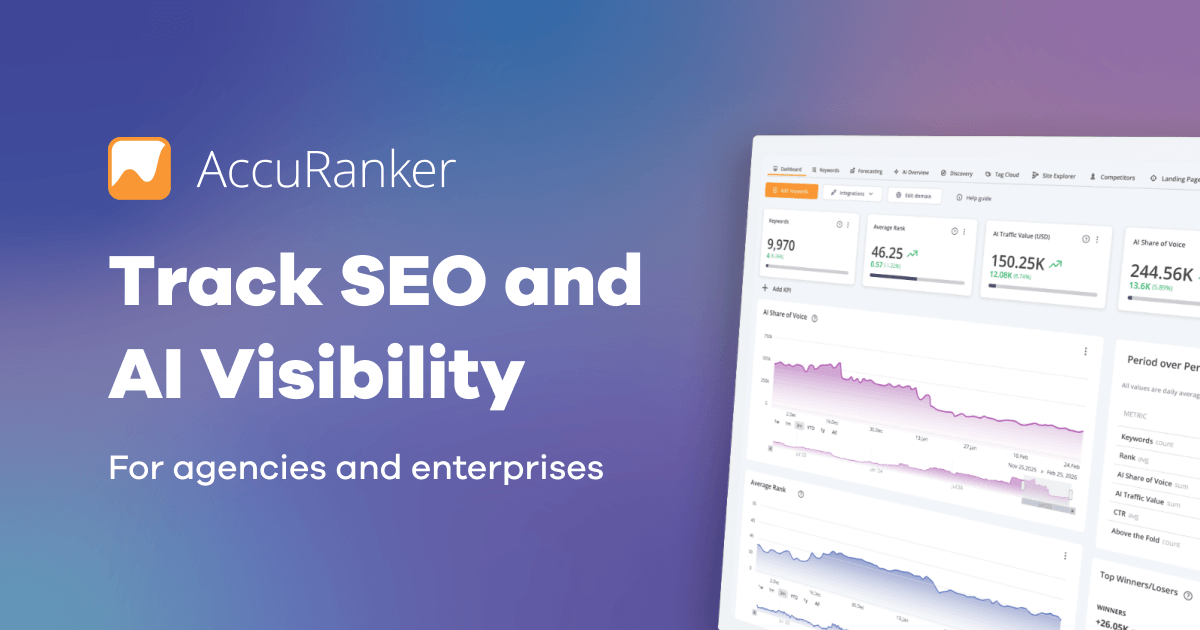
AccuRanker focuses on fast, detailed SERP tracking for professional SEO teams. Its strengths are segmentation, tags, competitor views, historical analysis, landing-page intelligence, and reporting around a controlled keyword portfolio.
Best fit: agencies and established in-house teams that want a specialist rank tracker rather than an all-in-one suite.
What to test: import one real project with desktop/mobile, locations, competitors, tags, search intent, and historical landing pages. Compare exact location behavior, refresh latency, SERP-feature detection, cannibalization visibility, Looker Studio/API output, and share-of-voice calculation.
Limitation: keyword tracking depth does not automatically provide site auditing, backlink research, content execution, or full AI citation analysis. Price the surrounding stack.
See the official AccuRanker website.
2. SE Ranking — best balanced all-in-one replacement
SE Ranking combines daily keyword tracking with site audits, competitor and keyword research, backlinks, local marketing, reporting, content workflows, and AI search visibility capabilities.
Best fit: small and mid-sized agencies or in-house teams seeking consolidation without moving immediately to the largest enterprise suites.
What to test: model total price for daily keywords, projects, seats, history, white label, API, local features, and AI prompts. Verify location accuracy, retained SERP evidence, report customization, backlink depth, audit limits, and whether the AI module covers required engines and markets.
Limitation: breadth creates value, but a specialist may offer deeper functionality for high-volume rank tracking or advanced GEO analysis. Evaluate the critical workflow rather than total feature count.
Review the official SE Ranking platform.
3. Semrush — best broad digital-marketing suite
Semrush is relevant when rank tracking is only one component of a wider competitive, keyword, backlink, site-audit, content, advertising, local, and AI visibility program.

Best fit: larger marketing organizations and agencies that can standardize teams on a broad suite.
What to test: build a permission and project model before comparing prices. Confirm tracked-keyword limits, locations, devices, update cadence, competitor slots, reporting, historical data, API access, AI databases, domains, prompts, and add-ons. Reconcile sample rankings and cited answers with source evidence.
Limitation: suite breadth can create unused cost and operational complexity. A focused team may get better economics from a specialist tracker plus selected research tools.
See the official Semrush website.
4. Ahrefs — best for research-led SEO teams
Ahrefs connects keyword and competitor research, backlink intelligence, content discovery, technical auditing, rank tracking, and brand/AI discovery. It is strongest when analysts need to understand why a page ranks and where authority or content opportunities exist—not only receive position alerts.
Best fit: SEO teams whose weekly work centers on competitor research, link evidence, content opportunities, and site diagnostics.
What to test: required rank update frequency, tracked locations and keywords, SERP history, competitor comparison, exports, API, project permissions, and Brand Radar scope. Distinguish market-scale AI discovery from recurring execution of your own controlled prompt list.
Limitation: teams needing daily granular rank operations or client reporting should ensure the tracking cadence and reporting workflow match Nightwatch before migrating.
Review the official Ahrefs platform.
5. ProRankTracker — best tracking-and-reporting specialist
ProRankTracker is a dedicated rank monitoring platform for websites, agencies, and search professionals. It emphasizes keyword positions across search engines and locations, competitor tracking, historical views, and client reporting.
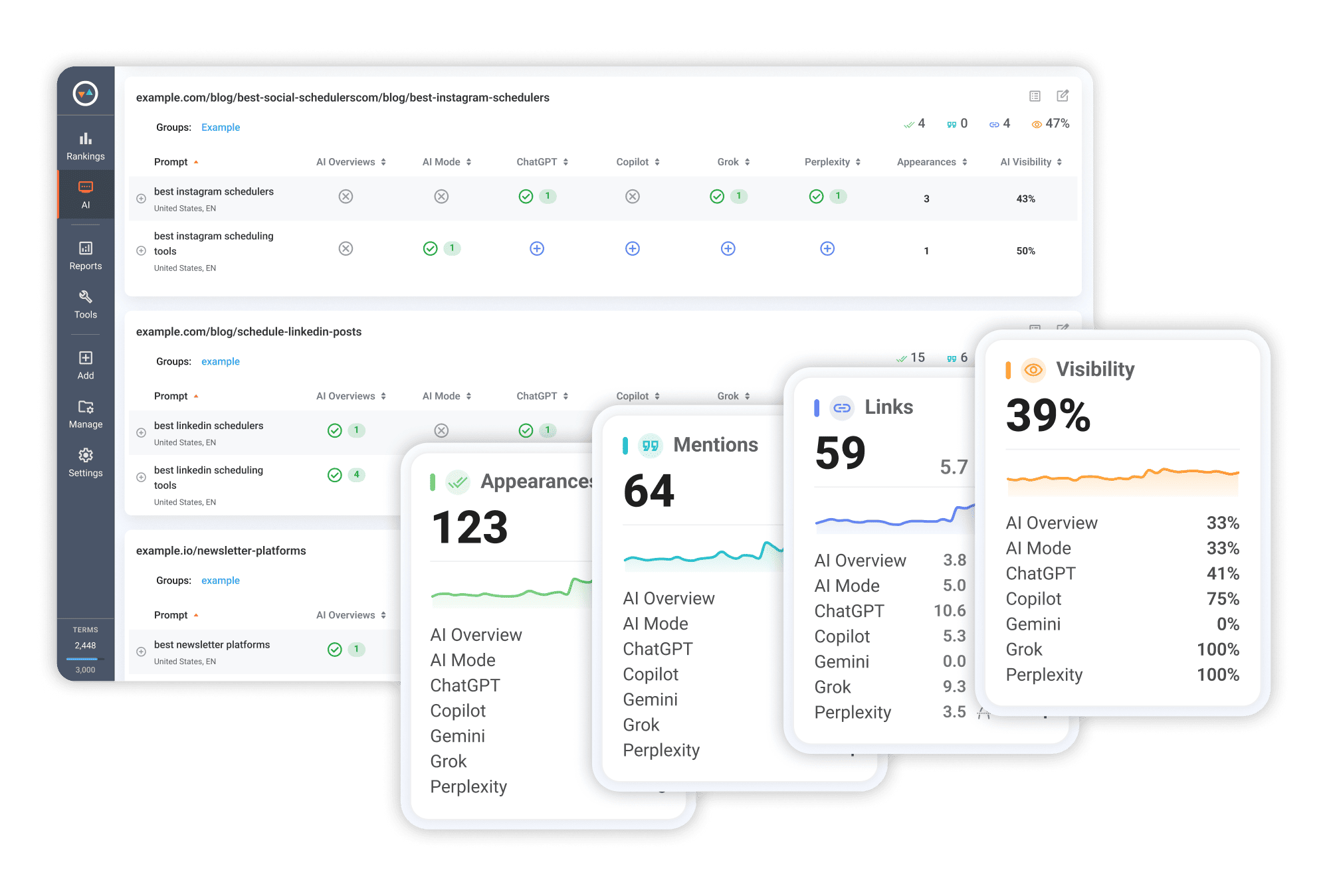
Best fit: teams that want rank tracking and reports without paying for a large research suite.
What to test: search engine and location coverage, mobile/desktop differences, local and map results, refresh schedules, URL discovery, language handling, report delivery, sub-accounts, API/export, and support for the team’s AI-search requirements.
Limitation: narrower tooling means keyword discovery, backlinks, audits, content, and deeper GEO workflows may require separate products.
See the official ProRankTracker website.
6. Wincher — best simple rank tracker for small teams
Wincher focuses on approachable rank monitoring, keyword organization, competitor tracking, reports, and prioritization for teams that do not need an enterprise data platform.
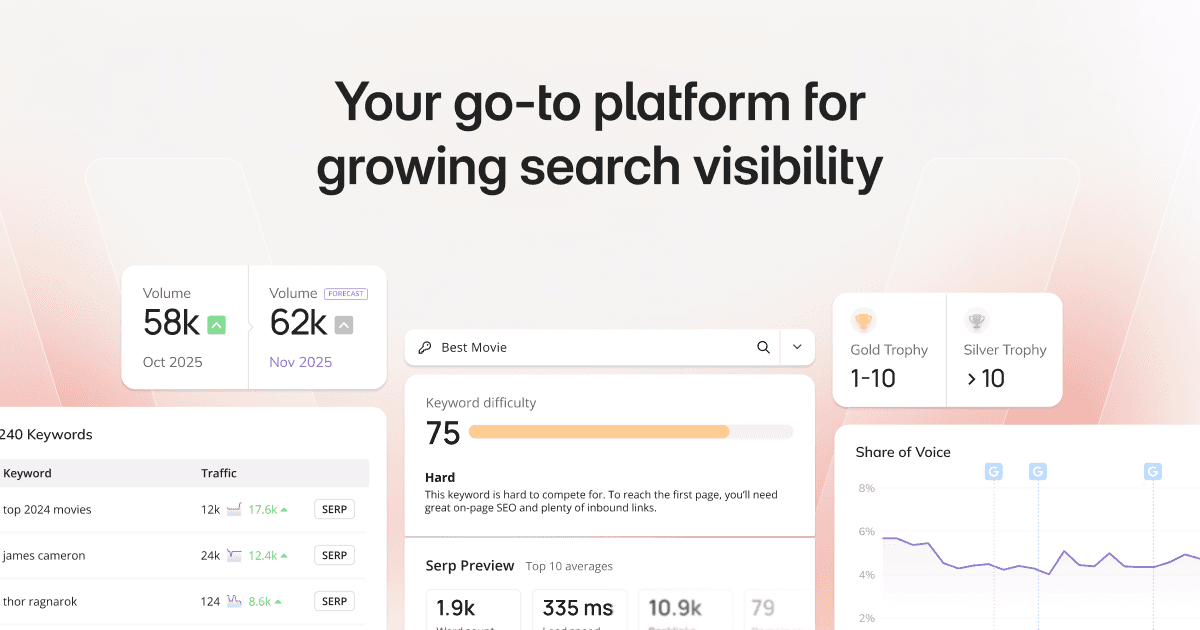
Best fit: small businesses, content teams, and agencies with straightforward Google tracking requirements.
What to test: keyword and website limits, location/device coverage, refresh frequency, competitor slots, on-page recommendations, historical data, alerts, user access, report branding, integrations, and export fidelity.
Limitation: complex local campaigns, very large portfolios, broad technical research, and multi-engine AI visibility may exceed its intended operating model.
Check the official Wincher website.
7. Advanced Web Ranking — best for scalable agency reporting
Advanced Web Ranking is built around professional rank tracking, large keyword portfolios, localization, competitor analysis, and customizable white-label reports.
Best fit: agencies and enterprises where reporting structure, client delivery, and scalable rank collection are more important than a unified SEO suite.
What to test: cost and completion time for full portfolio updates, exact location settings, search engines, SERP features, user roles, client views, scheduled reports, Looker Studio/API integration, history migration, and anomaly handling.
Limitation: it is primarily a rank tracking and reporting layer. Pair it with research, audit, backlink, content, and specialized AI visibility systems as required.
See the official Advanced Web Ranking website.
8. Dageno — best for AI search visibility and GEO execution
Dageno should be shortlisted when the main reason for leaving Nightwatch is deeper AI answer analysis. It monitors prompt-level mentions, recommendations, answer positions, citations, competitor share of voice, source gaps, sentiment, and crawler evidence, then connects findings to content and authority actions.
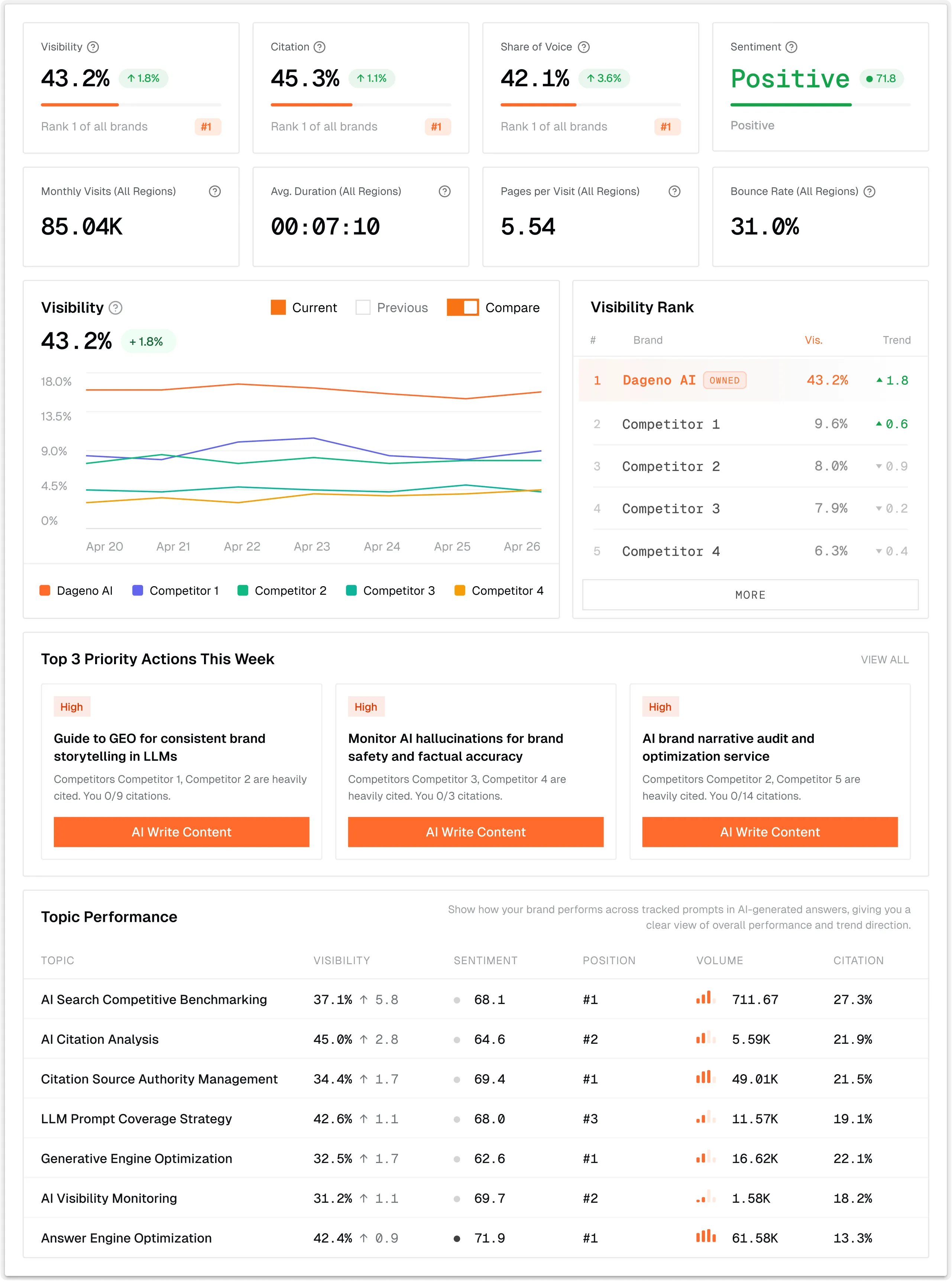
Best fit: SEO, content, brand, PR, and growth teams that need to understand not only whether they appear in AI answers, but why another source wins and what to change.
What to test: use the same 30–50 commercial and informational prompts across shortlisted products. Fix engines, languages, countries, and schedule. Compare raw answers, citations, entity matching, competitor detection, prompt demand, exports, and how quickly an analyst can create a defensible action.
Use Answer Engine Insights for prompt and citation evidence, BotSight Analytics for crawler activity, and the AI keyword tracking tools comparison for a wider specialist shortlist.
Limitation: Dageno is not a replacement for every traditional keyword-tracking requirement. Teams needing Nightwatch-level daily local SERPs may use Dageno alongside a dedicated rank tracker.
Ready to dominate AI search?
Get started - it's free! >Which Nightwatch alternative should you choose?
- Choose AccuRanker for specialized, fast SERP intelligence.
- Choose SE Ranking for a balanced SEO and AI suite.
- Choose Semrush for broad digital-marketing consolidation.
- Choose Ahrefs for backlink, keyword, competitor, and content research.
- Choose ProRankTracker for focused tracking and client reports.
- Choose Wincher for a simpler small-team workflow.
- Choose Advanced Web Ranking for large-scale agency reporting.
- Choose Dageno when AI mentions, citations, sources, and GEO execution are the priority.
The correct architecture may combine one traditional rank tracker with one AI visibility platform. Traditional keywords and generative prompts are different measurement units.
A fair proof-of-concept scorecard
Build two benchmark sets: 100 representative Google keywords and 30–50 AI prompts. Score each finalist on:
| Test | Evidence to retain |
|---|---|
| Rank agreement | Same-day position and exact location compared with a manual check |
| SERP evidence | Snapshot, URL, features, device, timestamp, and history |
| Local accuracy | City/postcode/map behavior for real business locations |
| Segmentation | Tags, intent, product, market, owner, and custom groups |
| AI transparency | Raw answer, model/surface, citations, competitors, and sentiment |
| Reporting | Scheduled delivery, white label, annotations, permissions, and exports |
| Reliability | Refresh time, failures, alerts, backfill, and support response |
| Economics | 12-month cost at projected keywords, prompts, engines, locations, and seats |
Weight the criteria before demos so that an attractive dashboard cannot outweigh a missing operational requirement.
How to migrate without breaking reporting
- Export keyword, URL, search engine, country, language, location, device, tags, competitors, and history.
- Document reports, recipients, schedules, filters, annotations, integrations, APIs, and dashboards.
- Separate traditional keywords from AI prompts; do not convert one into the other mechanically.
- Import a representative project and confirm location/device settings before a full migration.
- Run both tools in parallel for at least two complete reporting cycles.
- Reconcile ranking differences using timestamps, SERP snapshots, location, personalization controls, and search-engine databases.
- Rebuild client reports and downstream connections before ending the old service.
- Preserve exports and rollback instructions until stakeholders approve the new baseline.
Frequently asked questions
What is the closest alternative to Nightwatch?
AccuRanker and Advanced Web Ranking are close specialist candidates for professional rank tracking. SE Ranking offers a broader all-in-one replacement. The closest choice depends on location granularity, update cadence, reporting, keyword volume, and AI requirements.
Does Nightwatch track AI search in 2026?
Yes. Nightwatch documents AI/LLM tracking for brand mentions, position, sentiment, sources, competitors, and reporting. Evaluate alternatives against its current product, not an older feature list.
What is the best alternative for local rankings?
Test Nightwatch itself against AccuRanker, SE Ranking, ProRankTracker, or a dedicated local map-grid tool using the exact cities, postcodes, devices, and map surfaces required. “Local tracking” can mean a country setting, city simulation, or coordinate-level grid—these are not equivalent.
What is the best alternative for AI visibility?
Dageno is designed for prompt-level mentions, citations, competitors, sources, sentiment, crawler evidence, and GEO actions. SE Ranking, Semrush, Ahrefs, and ProRankTracker also offer different AI-related capabilities. Use one controlled prompt set to compare evidence depth.
Why do two rank trackers show different positions?
They may use different data centers, locations, devices, languages, timestamps, personalization controls, SERP parsing, and update schedules. Require retained evidence before deciding one value is wrong.
Final recommendation
Do not replace Nightwatch because another tool has a longer feature list. Map the workflows that matter, test identical keywords and prompts, preserve source evidence, and calculate the fully configured cost. AccuRanker leads for specialist SERP operations, SE Ranking for balanced consolidation, Advanced Web Ranking for scalable reporting, and Dageno for deep AI visibility and GEO execution.
About the Author

Updated by
Tim
Tim is the co-founder of Dageno and a serial AI SaaS entrepreneur, focused on data-driven growth systems. He has led multiple AI SaaS products from early concept to production, with hands-on experience across product strategy, data pipelines, and AI-powered search optimization. At Dageno, Tim works on building practical GEO and AI visibility solutions that help brands understand how generative models retrieve, rank, and cite information across modern search and discovery platforms.
Related Articles
Brand24 Alternative: Best Picks for Social Listening and AI Search Visibility in 2026
Tim • Jul 29, 2026
7 Best Semrush AI Toolkit Alternatives in 2026: A Complete Comparison

Ye Faye • Sep 14, 2026
Best Alhena AI Alternative for GEO and AI Search Visibility in 2026
Tim • Aug 11, 2026
7 Best ZipTie Alternatives in 2026
Ye Faye • Sep 11, 2026