10 Enterprise Rank Tracking Tools for SEO and AI Search
Compare ten enterprise rank tracking tools for keyword positions, locations, APIs, reporting, AI-answer evidence, governance, and scalable SEO workflows across global client portfolios and in-house teams.
Track AI search visibilityNo install

Updated by
8 Min Read
Updated on Sep 10, 2026
TL;DR
For enterprise rank tracking, use AccuRanker or Advanced Web Ranking for specialist position monitoring, Semrush or Ahrefs for broad SEO intelligence, SE Ranking for agency value, Nightwatch or BrightLocal for local search, and Search Console for first-party outcomes. Add Dageno or Profound as a separate AI-answer layer. Do not merge Google positions and AI mentions into one unexplained score.
Enterprise Rank Tracking Tools at a Glance
| Tool | Measurement layer | Best for | Main limitation |
|---|---|---|---|
| AccuRanker | Google/search rankings | enterprise position tracking | specialist tracker; needs separate crawling/content/AI tools |
| Semrush | Google/search rankings | broad enterprise SEO suite | cost, seats and toolkit add-ons grow quickly |
| Ahrefs | Google/search rankings | search and backlink intelligence | tracking cadence and AI products require plan-level review |
| SE Ranking | Google/search rankings | agency value and client reporting | packaging and checks differ across products |
| Nightwatch | Google/search rankings | local and multi-location tracking | requires a separate deep AI citation layer |
| Advanced Web Ranking | Google/search rankings | large-scale reporting | greater configuration overhead |
| BrightLocal | Google/search rankings | local SEO agencies | not a national or AI-search research suite |
| Google Search Console | Google/search rankings | first-party Google outcomes | delayed aggregated position, no fixed daily rank |
| Dageno AI | AI answers | AI-search evidence companion | not an exact Google keyword-position tracker |
| Profound | AI answers | enterprise answer-engine reporting | multi-engine depth starts at a higher price |
Why This Page Is Different From a Generic Rank Tracker List
This guide targets the GSC query cluster around enterprise rank tracking tools and teams asking how to monitor conventional search visibility while optimizing AI-driven answers. It focuses on governance, scale, APIs, locations, history, reporting and evidence. For a broader small-business comparison, see the separate Dageno guide to best rank tracking software.
Evaluation Method
We compare data type, update cadence, location/device coverage, SERP features, history, segmentation, exports/API, seats, client reporting, prompt/answer evidence and production limits. Product facts come from official documentation and pricing checked September 10, 2026; no universal accuracy winner is claimed because accuracy depends on engine, location, personalization and collection method.
10 Enterprise Rank Tracking Tools Reviewed
1. AccuRanker — enterprise position tracking
AccuRanker provides fast on-demand and scheduled keyword data, segmentation, SERP features, landing pages and reporting.
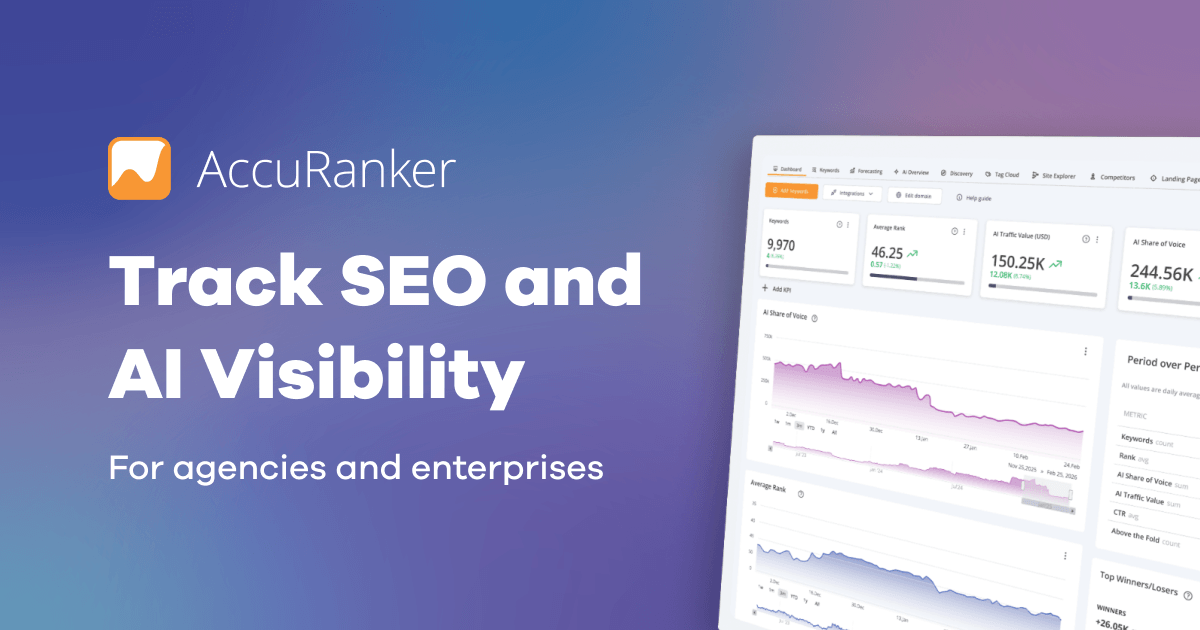
Evidence and workflow: Enterprise buyers should demand a sample export and run the same keyword set, market, device and dates against a second tool. Fast on-demand and scheduled keyword data, segmentation, serp features, landing pages and reporting.
Pricing and scale: Verify current pricing, keyword allowances, projects, update frequency, seats and API access on the official plan page.
Best fit: enterprise position tracking. Material limitation: specialist tracker; needs separate crawling/content/AI tools
Verdict: Choose AccuRanker when enterprise position tracking is the primary job; pair it with a different measurement layer when necessary.
2. Semrush — broad enterprise SEO suite
Semrush provides position tracking, keyword and competitor research, audits, reporting, API on higher plans and optional AI Visibility.

Evidence and workflow: Enterprise buyers should demand a sample export and run the same keyword set, market, device and dates against a second tool. Position tracking, keyword and competitor research, audits, reporting, api on higher plans and optional ai visibility.
Pricing and scale: SEO Toolkit plans currently publish $139.95, $249.95 and $499.95 monthly tiers; extra users and AI toolkits are separate costs.
Best fit: broad enterprise SEO suite. Material limitation: cost, seats and toolkit add-ons grow quickly
Verdict: Choose Semrush when broad enterprise SEO suite is the primary job; pair it with a different measurement layer when necessary.
3. Ahrefs — search and backlink intelligence
Ahrefs provides rank tracking combined with backlink, content and competitive research plus Brand Radar research.
Evidence and workflow: Enterprise buyers should demand a sample export and run the same keyword set, market, device and dates against a second tool. Rank tracking combined with backlink, content and competitive research plus brand radar research.
Pricing and scale: Verify current pricing, keyword allowances, projects, update frequency, seats and API access on the official plan page.
Best fit: search and backlink intelligence. Material limitation: tracking cadence and AI products require plan-level review
Verdict: Choose Ahrefs when search and backlink intelligence is the primary job; pair it with a different measurement layer when necessary.
4. SE Ranking — agency value and client reporting
SE Ranking provides rankings, audits, research, reports and optional AI Results Tracker/SE Visible.
Evidence and workflow: Enterprise buyers should demand a sample export and run the same keyword set, market, device and dates against a second tool. Rankings, audits, research, reports and optional ai results tracker/se visible.
Pricing and scale: Model conventional keywords and AI “checks” separately; one prompt on one AI platform consumes one check.
Best fit: agency value and client reporting. Material limitation: packaging and checks differ across products
Verdict: Choose SE Ranking when agency value and client reporting is the primary job; pair it with a different measurement layer when necessary.
5. Nightwatch — local and multi-location tracking
Nightwatch provides location-aware keyword monitoring, segmentation and reports.
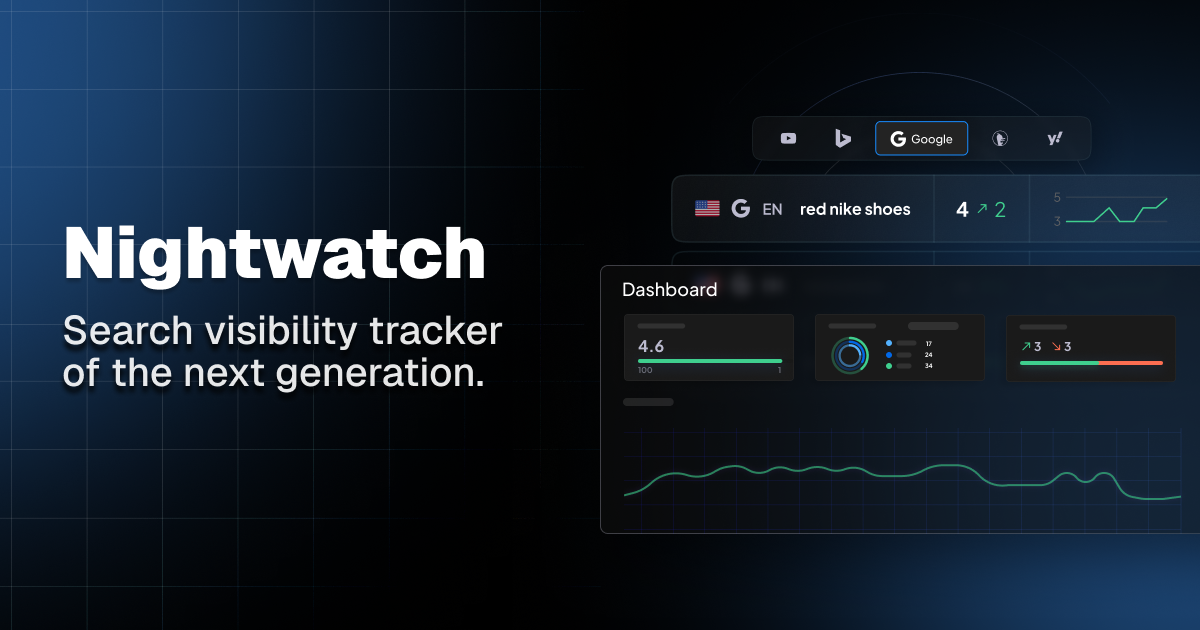
Evidence and workflow: Enterprise buyers should demand a sample export and run the same keyword set, market, device and dates against a second tool. Location-aware keyword monitoring, segmentation and reports.
Pricing and scale: Verify current pricing, keyword allowances, projects, update frequency, seats and API access on the official plan page.
Best fit: local and multi-location tracking. Material limitation: requires a separate deep AI citation layer
Verdict: Choose Nightwatch when local and multi-location tracking is the primary job; pair it with a different measurement layer when necessary.
6. Advanced Web Ranking — large-scale reporting
Advanced Web Ranking provides scheduled rankings, white-label reports, segmentation and enterprise workflows.
Evidence and workflow: Enterprise buyers should demand a sample export and run the same keyword set, market, device and dates against a second tool. Scheduled rankings, white-label reports, segmentation and enterprise workflows.
Pricing and scale: Verify current pricing, keyword allowances, projects, update frequency, seats and API access on the official plan page.
Best fit: large-scale reporting. Material limitation: greater configuration overhead
Verdict: Choose Advanced Web Ranking when large-scale reporting is the primary job; pair it with a different measurement layer when necessary.
7. BrightLocal — local SEO agencies
BrightLocal provides local rank monitoring, maps, citations and client reporting.
Evidence and workflow: Enterprise buyers should demand a sample export and run the same keyword set, market, device and dates against a second tool. Local rank monitoring, maps, citations and client reporting.
Pricing and scale: Verify current pricing, keyword allowances, projects, update frequency, seats and API access on the official plan page.
Best fit: local SEO agencies. Material limitation: not a national or AI-search research suite
Verdict: Choose BrightLocal when local SEO agencies is the primary job; pair it with a different measurement layer when necessary.
8. Google Search Console — first-party Google outcomes
Google Search Console provides actual impressions, clicks, queries, pages, countries, devices and average position.
Evidence and workflow: Enterprise buyers should demand a sample export and run the same keyword set, market, device and dates against a second tool. Actual impressions, clicks, queries, pages, countries, devices and average position.
Pricing and scale: Free with verified site access.
Best fit: first-party Google outcomes. Material limitation: delayed aggregated position, no fixed daily rank
Verdict: Choose Google Search Console when first-party Google outcomes is the primary job; pair it with a different measurement layer when necessary.
9. Dageno AI — AI-search evidence companion
Dageno AI provides competitors, citations, important URLs, cross-model/region comparison, GEO gaps and GSC/GA4 context.

Evidence and workflow: Enterprise buyers should demand a sample export and run the same keyword set, market, device and dates against a second tool. Competitors, citations, important urls, cross-model/region comparison, geo gaps and gsc/ga4 context.
Pricing and scale: Request a production quote for prompts × models × markets × languages × refreshes.
Best fit: AI-search evidence companion. Material limitation: not an exact Google keyword-position tracker
Verdict: Choose Dageno AI when AI-search evidence companion is the primary job; pair it with a different measurement layer when necessary.
10. Profound — enterprise answer-engine reporting
Profound provides AI visibility, citations, raw answers, regions, competitors and enterprise workflows.
Evidence and workflow: Enterprise buyers should demand a sample export and run the same keyword set, market, device and dates against a second tool. Ai visibility, citations, raw answers, regions, competitors and enterprise workflows.
Pricing and scale: Starter is $99/month ChatGPT-only; Growth is $399/month for three engines and 100 prompts; enterprise is tailored.
Best fit: enterprise answer-engine reporting. Material limitation: multi-engine depth starts at a higher price
Verdict: Choose Profound when enterprise answer-engine reporting is the primary job; pair it with a different measurement layer when necessary.
Recommended Enterprise Stack by Job
- First-party outcomes: Google Search Console plus analytics.
- Daily keyword positions: AccuRanker, AWR, Semrush, SE Ranking or Nightwatch.
- Technical validation: a crawler such as Screaming Frog or an enterprise crawler.
- Backlinks and competitive research: Ahrefs or Semrush.
- AI-answer visibility and citations: Dageno or Profound.
- Reporting layer: standardized warehouse/BI definitions so clients do not confuse average position, local rank and AI inclusion.
FAQ
What are the best enterprise rank tracking tools?
AccuRanker and AWR are specialist choices; Semrush and Ahrefs cover broad SEO intelligence; SE Ranking emphasizes agency value; Nightwatch and BrightLocal cover local needs. Dageno and Profound measure AI answers rather than conventional ordered rankings.
Are rank tracking tools still useful for AI search?
Yes, for conventional discovery, landing-page diagnosis and Search Console interpretation. They cannot by themselves prove inclusion or citations inside generated answers.
References
About the Author

Updated by
Tim
Tim is the co-founder of Dageno and a serial AI SaaS entrepreneur, focused on data-driven growth systems. He has led multiple AI SaaS products from early concept to production, with hands-on experience across product strategy, data pipelines, and AI-powered search optimization. At Dageno, Tim works on building practical GEO and AI visibility solutions that help brands understand how generative models retrieve, rank, and cite information across modern search and discovery platforms.