SERP Features in 2026: The Complete Guide to 11 Types and How to Optimize for Each
The complete 2026 guide to SERP features — covering what each of the 11 most important types is, why it matters for your traffic, and the specific optimization tactics that actually earn placements.
Track AI search visibilityNo install

Updated by
10 Min Read
Updated on May 14, 2026
TL;DR: SERP features are enhanced elements that appear above, beside, or within Google's traditional organic results — including featured snippets, AI Overviews, People Also Ask boxes, Local Pack, Knowledge Panels, Image Packs, Video Carousels, Rich Snippets, and more. Google displays 30+ types of SERP features. The 11 covered in this guide represent the highest-value opportunities for organic brands. Winning these features is increasingly inseparable from AI search optimization, as many SERP features (especially AI Overviews) operate on the same content quality signals that determine AI citation rates.
If you're optimizing exclusively for traditional keyword rankings, you're competing for one lane on a ten-lane highway. Modern search results pages are packed with featured snippets, AI-generated summaries, video carousels, product listings, local maps, and discussion forums — all appearing above, beside, and between the organic blue links that most SEO strategies are built around.
Ahrefs' research on 55.8 million search queries found that AI Overviews now appear in over 54.6% of all Google searches. Featured snippets appear for more than 12% of all queries. The Local Pack captures the first visible content on the page for any locally-relevant query. In many search results pages, a user can find a complete answer without ever reaching the traditional organic listings.
For brands serious about organic visibility, SERP feature optimization is no longer optional — it is the primary battleground for top-of-page presence.
What Are SERP Features?
SERP features are enhanced elements that appear on Google's search results page beyond the standard list of organic links. Instead of only showing blue links with short descriptions, SERP features offer more interactive, visual, or information-rich results designed to help users find what they need faster — and often without clicking through to an external website at all.
The key distinction between organic results and SERP features:
| Organic Results | SERP Features |
|---|---|
| Standard blue link + meta description | Rich content elements (snippets, panels, carousels) |
| Determined primarily by keyword ranking | Triggered by query intent + content structure |
| Fixed position (1–10 per page) | Variable position (can appear above position #1) |
| Click usually required | Many provide answers without requiring a click |
| Optimized through standard SEO | Require specific optimization strategies |
Google has documented over 30 distinct SERP feature types. Some are paid (Sponsored Results, Shopping Ads). This guide covers the 11 most strategically important free features — the ones that represent the highest-value organic visibility opportunities.
SERP Feature #1: Featured Snippets (Position Zero)
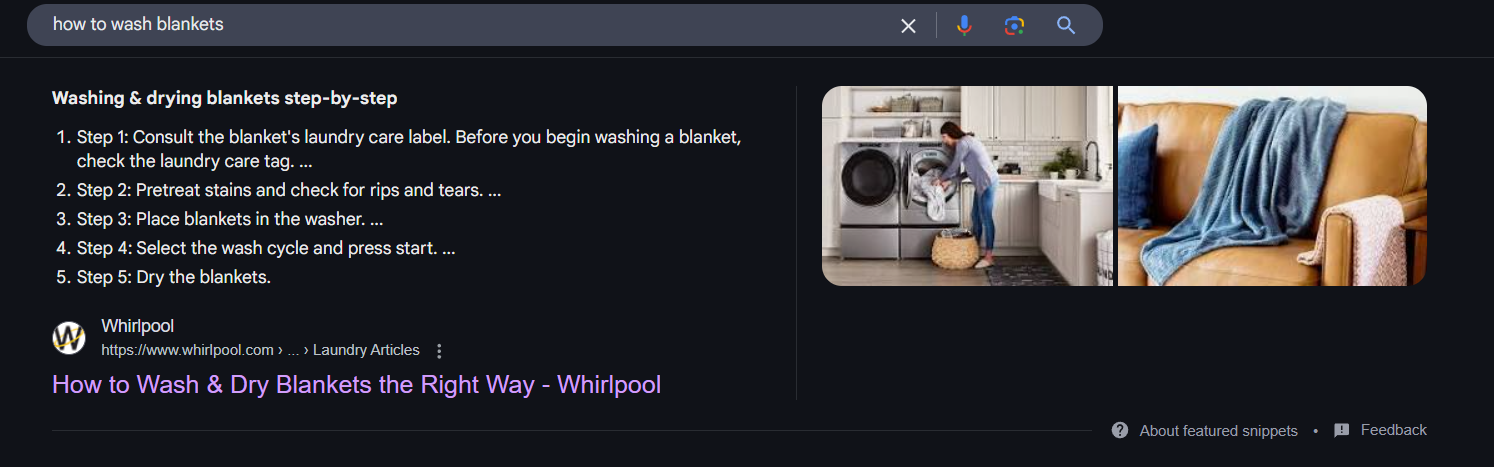
Featured snippets appear above all traditional organic results and below paid ads — at "position zero." Google extracts a specific passage from a webpage it considers the best answer to the user's query and displays it directly in the SERP, typically with the source URL and title.
Featured snippets appear in four formats, depending on the query type:
- Paragraph snippets: A 2–5 sentence direct answer to a definition or explanation query ("What is machine learning?")
- List snippets: An ordered or unordered list for process, ranking, or step-based queries ("How to set up Google Search Console")
- Table snippets: Comparison data presented in tabular format ("Python vs JavaScript: feature comparison")
- Video snippets: YouTube video clips for tutorial or how-to queries
How to Optimize for Featured Snippets
Step 1: Verify the target keyword actually triggers a featured snippet. Search the keyword in an incognito window and check whether a snippet appears. If no snippet exists, winning one requires creating a new snippet — harder than displacing an existing one.
Step 2: Match the existing snippet format. If Google is showing a paragraph snippet, write a paragraph answer. Attempting a list format when Google prefers paragraphs reduces snippet eligibility.
Step 3: Structure your content to make the answer immediately accessible:
- Use the target keyword or a close variation as an H2 heading near the top of the article
- For paragraph snippets: Write a concise definition (40–60 words) directly below the H2, starting with a declarative statement. Avoid first-person language or brand names in the snippet candidate.
- For list snippets: Structure content with clear H3 headings for each step or item, using consistent numbering or bullet format throughout.
- For table snippets: Include properly formatted HTML tables presenting comparable data with clear row and column labels.
Pro tip: Featured snippets and AI Overviews draw from overlapping content characteristics — direct answers, question-based headings, and clean HTML structure. Optimizing for featured snippets simultaneously improves AI Overview eligibility.
SERP Feature #2: AI Overviews
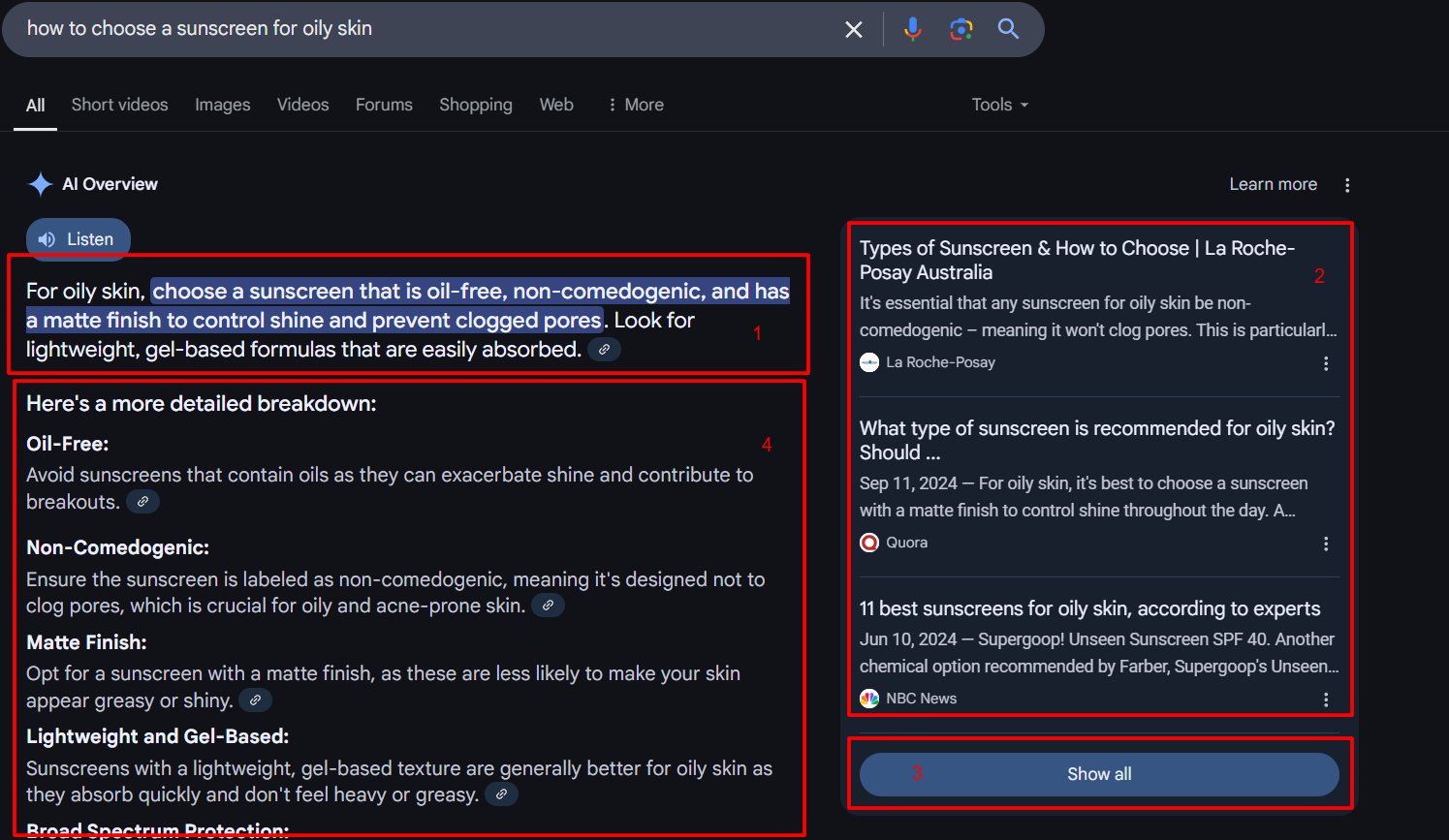
AI Overviews are Google's AI-generated summaries that synthesize information from multiple sources to create comprehensive responses to complex queries. Unlike featured snippets that extract content from a single webpage, AI Overviews combine insights from multiple sources and appear with citations to supporting pages.
Ahrefs' study documents that AI Overviews now appear in over 54% of Google searches — making them the most prevalent SERP feature by volume. Critically, the same study found that AI Overviews generate a 34.5% decline in click-through rates to source pages — meaning that for queries triggering AI Overviews, you are either cited inside the overview (and receive some traffic) or you receive progressively less traffic as AI Overviews capture attention previously directed at organic results.
How to Optimize for AI Overviews
AI Overview citations primarily come from pages already ranking in Google's top 10 for the target query — but not exclusively. Writesonic's analysis of 1 million+ AI Overviews found that 40.58% of citations come from Google's top 10, meaning 59.42% come from outside the top 10. This creates citation opportunity for brands that structure content correctly even without dominant traditional rankings.
Key AI Overview optimization tactics:
- Prioritize traditional ranking first: AI Overviews primarily cite from the first two pages of results. Strong organic ranking is the prerequisite.
- Use question-based headings immediately followed by direct answers: The inverted pyramid structure (answer first, context second) is the format AI Overview extraction favors.
- Break information into digestible chunks: Short paragraphs (2–3 sentences), proper heading hierarchy (H1 → H2 → H3), and lists or tables where applicable make content easier for AI systems to extract.
- Target informational long-tail queries: AI Overviews appear most frequently for complex informational queries where synthesized answers add genuine value.
- Ensure AI crawlers can access your content: Verify GPTBot, Google-Extended, and ClaudeBot are allowed in robots.txt, and confirm key content is not locked behind JavaScript rendering.
SERP Feature #3: People Also Ask
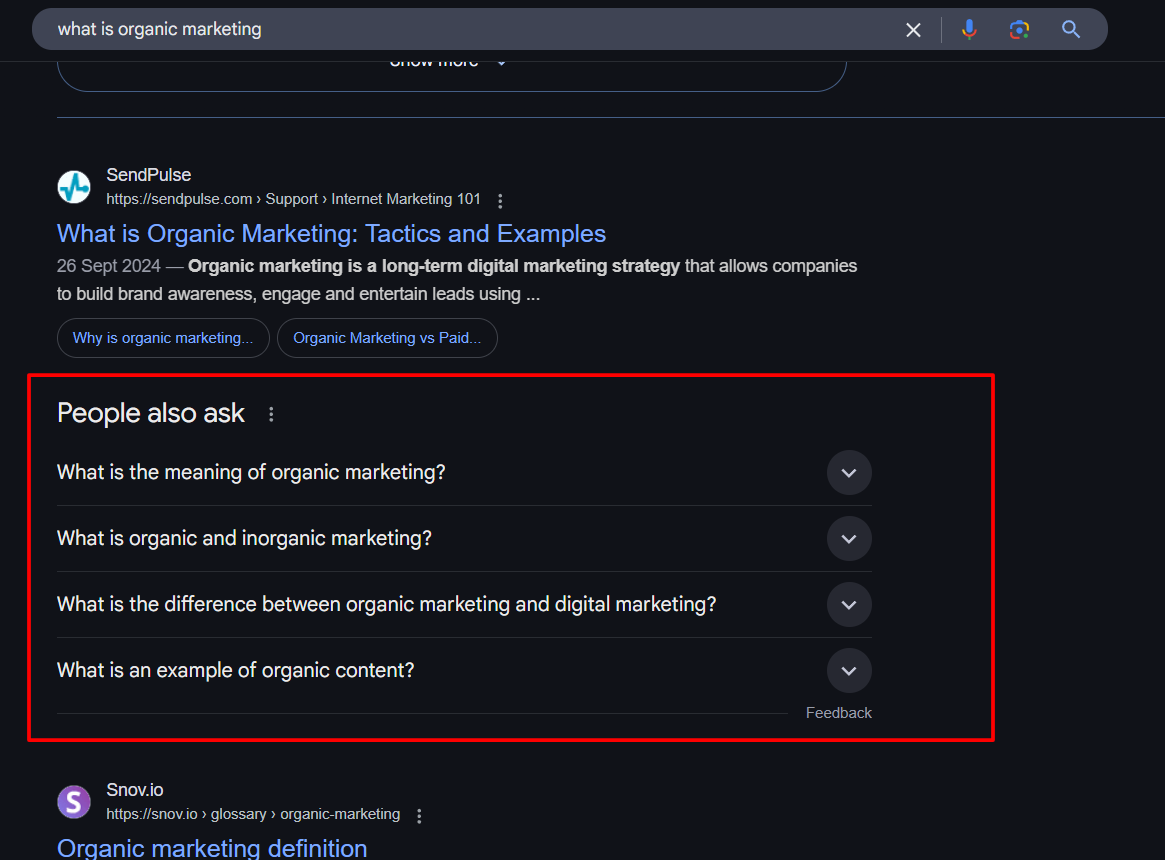
People Also Ask (PAA) boxes are expandable question-and-answer sections that appear within Google search results, typically between positions 1–4 — though they can appear anywhere on the page. Each question expands to show a brief answer extracted from a web source with a link to the full page. When a user clicks on a question, more related questions appear, creating an essentially infinite scroll of related information.
Unlike featured snippets (one answer per query), PAA boxes contain multiple questions and continue expanding — meaning multiple brands can simultaneously appear within the same PAA box for the same seed query.
How to Optimize for People Also Ask
Find the right questions: Use keyword research tools, Google's own PAA boxes, Reddit and Quora community discussions, and platforms like AnswerThePublic to identify the question-format keywords your audience is actually using. These natural language questions — "How does X work?", "What's the difference between X and Y?", "Is X worth it?" — are the direct targets.
Structure content as FAQ sections: Create dedicated FAQ sections in your articles covering the most common PAA questions for your target topics. Each Q&A pair should:
- Use the question verbatim (or close variation) as the heading
- Answer the question concisely in the first 40–50 words
- Follow with 1–2 sentences of supporting context if appropriate
Implement FAQPage schema: Marking up Q&A content with FAQPage schema signals to Google that the content is structured as a question-answer format, increasing eligibility for both PAA inclusion and AI Overview citation.
SERP Feature #4: Knowledge Panels
Knowledge panels appear as information boxes on the right side (desktop) or within results (mobile) when users search for specific entities — people, places, organizations, brands, or products — that exist in Google's Knowledge Graph. They pull data from multiple trusted sources across the web to provide a snapshot overview of the entity.
A typical knowledge panel for a brand contains: company name and one-line description, logo or representative image, founding date and location, social media profile links, official website link, related entities under "People also search for."
How to Optimize for Knowledge Panels
Knowledge panels depend on Google's Knowledge Graph rather than direct page ranking signals — meaning the optimization approach is fundamentally different from other SERP features.
Build your entity footprint across the web:
- Create or claim your Wikipedia page (strong Knowledge Graph signal)
- Maintain a complete, consistent About page on your website
- Ensure consistent Name, Address, Phone (NAP) data across your website, Google Business Profile, LinkedIn, Twitter/X, Facebook, and relevant industry directories
- Secure mentions and coverage in reputable publications in your industry
Claim your Knowledge Panel: Once Google generates a panel for your entity, claim it through Google's official verification process to gain the ability to suggest edits to factual information and select featured images.
Maintain cross-platform consistency: Google verifies entity information against multiple sources. Inconsistencies between how your brand is described on different platforms create entity ambiguity that reduces Knowledge Panel accuracy and can prevent panel generation entirely.
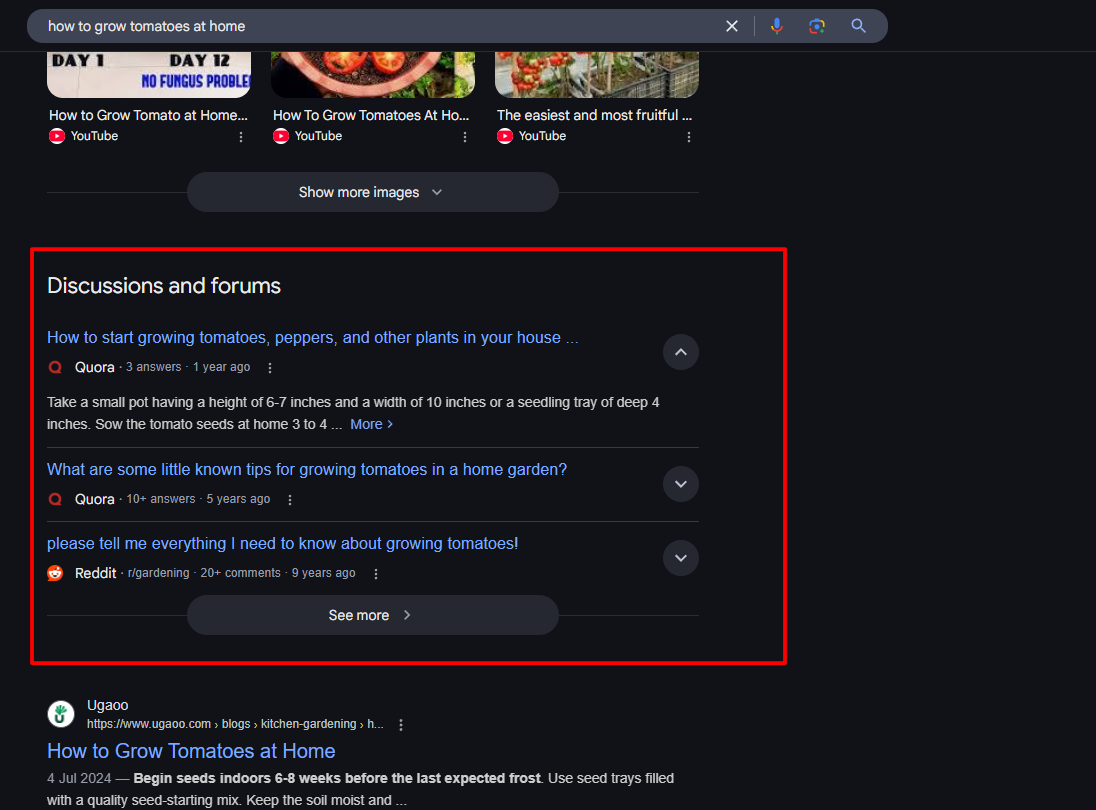
SERP Feature #5: Discussions and Forums
The Discussions and Forums SERP feature pulls relevant conversations from platforms like Reddit, Quora, and niche community forums directly into search results. This feature reflects Google's growing emphasis on authentic human experience as a content quality signal — and Reddit's dramatic growth in AI Overviews citation (documented as a 450% increase in Writesonic's research).
How to Optimize for Discussions and Forums
Participate authentically: Engage in Reddit and Quora communities relevant to your industry. Answer questions with genuine expertise, not promotional language. Subreddits and forum communities that detect brand promotion will ban accounts and undermine any visibility gains.
Be transparent: When relevant to a discussion, identify yourself and your company affiliation. Authentic, transparent participation builds the community trust that earns legitimate citations.
Consider building your own community: Creating a dedicated Q&A or discussion section on your own website can qualify you for Discussions and Forums appearances with content you control. Community management requires ongoing investment but generates citation-eligible content continuously.
SERP Feature #6: Image Packs
Image Packs are horizontal rows or grids of images that appear within search results when Google determines that visual content better serves the user's query — typically for queries with strong visual intent ("minimalist desk setup," "mountain wedding venues," "mid-century modern living room").
How to Optimize for Image Pack Inclusion
Use descriptive, keyword-relevant alt text: Google cannot see what an image depicts — it relies on surrounding text, file names, and alt attributes to determine relevance. Write alt text that accurately describes the image content using natural language, including the target keyword where it naturally fits.
Use descriptive file names: best-minimalist-desk-setup-2026.jpg is significantly more informative than IMG_4523.jpg for Google's indexing algorithms.
Optimize image file size: Large image files slow page load times, which negatively affects rankings and Core Web Vitals. Use WebP format, compress images to the minimum quality level that maintains visual clarity, and implement lazy loading for images below the fold.
Write descriptive captions: Image captions are one of the most-read pieces of text on any page — both by users and by Google's image understanding systems.
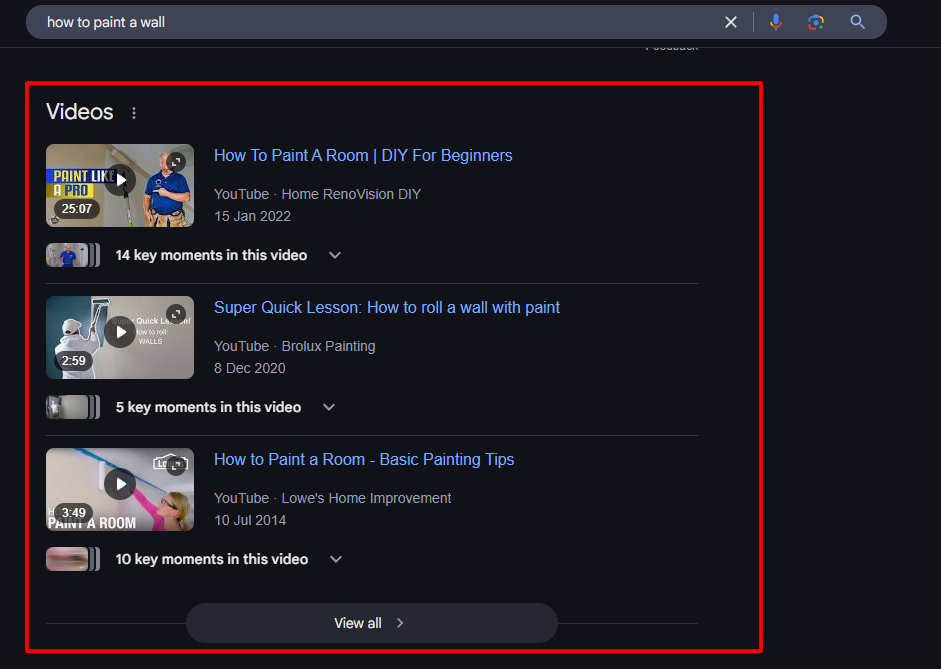
SERP Feature #7: Video Carousels
Video carousels appear as horizontal rows of video thumbnails — typically 3–4 videos initially with scroll options — for queries where Google determines video content better serves the user's intent (tutorials, how-to guides, product demonstrations, entertainment). YouTube dominates these carousels, appearing in over 80% of featured video slots given Google's ownership of the platform.
How to Optimize for Video Carousels
Target video-intent keywords: Search for your target keywords and check whether video carousels appear. Queries with strong how-to or tutorial intent ("how to set up two-factor authentication," "how to do a deadlift correctly") are the primary carousel triggers.
Optimize all video metadata:
- Title: Include the target keyword near the beginning. Keep under 60 characters to prevent truncation.
- Description: Use YouTube's 5,000-character limit. Include the primary keyword, related keywords, timestamps for key sections, and relevant links.
- Thumbnails: Custom thumbnails with high-contrast text overlays significantly outperform auto-generated thumbnails for CTR.
- Timestamps: Mark key moments in the video description to enable Google to display chapter markers in search results.
Embed videos on relevant web pages with VideoObject schema markup to increase discovery probability and provide structured data about video content.
Prioritize watch time and audience retention: Google's video ranking algorithm weights engagement metrics heavily. Videos that keep viewers watching longer rank higher — meaning content quality ultimately determines carousel placement.
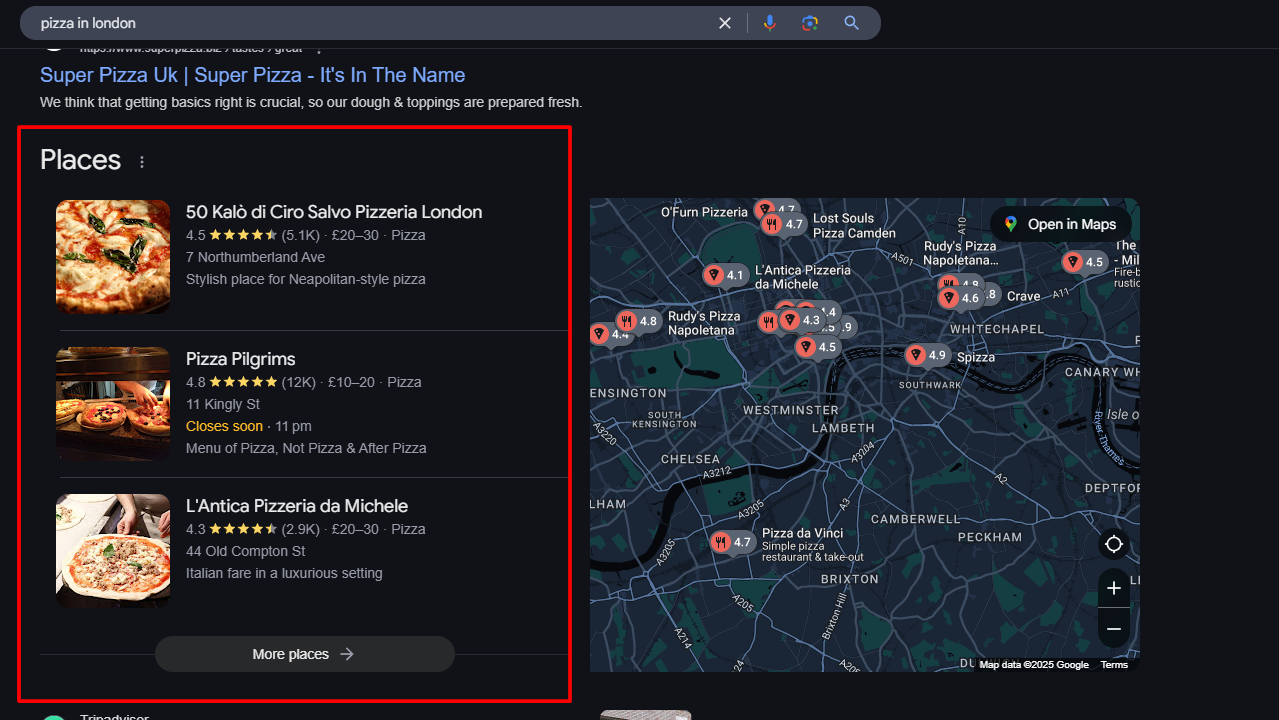
SERP Feature #8: Local Pack
The Local Pack — also called the Map Pack or 3-Pack — appears as a map with three business listings for any query with local intent ("pizza restaurant near me," "dentist in downtown Portland," "plumber open Sunday"). The Local Pack typically appears above organic results for local queries, capturing the most visible real estate on the SERP.
How to Optimize for Local Pack
Google's Local Pack algorithm weights three factors: Relevance (how well a business matches the query), Distance (how close the business is to the user), and Prominence (how well-known and trusted the business is online).
Google Business Profile (GBP) is the foundation:
- Select the most accurate business categories — primary category is the most important ranking signal
- Complete every available profile field including services, hours, description, photos, and FAQs
- Update hours immediately for holidays and temporary changes
- Regularly post updates, events, and promotions to signal active management
NAP consistency: Ensure your business Name, Address, and Phone number are identical across your website, GBP, Yelp, Apple Maps, Bing Places, and all directory listings. Even minor inconsistencies (Suite vs. Ste., different phone number formats) can create entity disambiguation problems.
Reviews strategy: High-quality positive reviews are one of the most significant Local Pack ranking signals. Develop a system for requesting reviews from satisfied customers through email, SMS, or in-person QR codes. Respond to all reviews — positive and negative — within 48 hours.
LocalBusiness schema: Implement LocalBusiness schema (or the relevant subtype: Restaurant, MedicalClinic, LawFirm, etc.) on your contact and location pages to provide machine-readable business identity information.
SERP Feature #9: Popular Products
The Popular Products feature is an organic (non-paid) carousel that shows relevant products for commercial queries, including product images, titles, prices, ratings, and available retailers. Users who click through reach a dedicated Google product page with detailed information before selecting a retailer.
How to Optimize for Popular Products
Make product data accessible to Google through one of two methods:
- Google Merchant Center: Submit a product feed with required attributes (id, title, description, image_link, link, price, brand, GTIN). Enable "Free product listings" in your Merchant Center account.
- Product schema markup: Add Product schema to your product pages with required properties (image, name, offers, review) and optional but valuable properties (brand, description, gtin, aggregateRating).
Optimize product content:
- Write keyword-rich, descriptive product titles that match how users search
- Use high-quality product images from multiple angles
- Encourage and display authentic customer reviews
- Keep pricing competitive with market benchmarks
SERP Feature #10: Rich Snippets
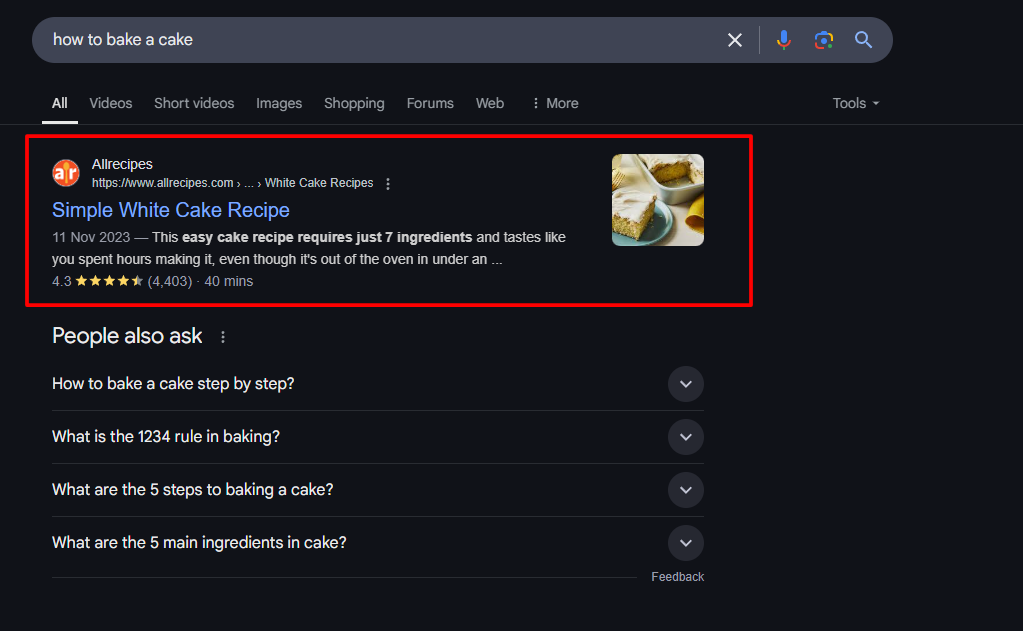
Rich snippets are enhanced search listings that show extra information beyond the standard title, URL, and description — pulling elements like star ratings, product prices, recipe cooking times, event dates, or FAQ answers directly into the standard result listing. Rich results significantly improve click-through rates even when not in "position zero."
How to Optimize for Rich Snippets
Implement structured data markup in JSON-LD format (Google's preferred format) for the content type that matches your page:
- Products: Product + Offer + AggregateRating schema
- Articles: Article or BlogPosting schema
- Recipes: Recipe schema with cookTime, nutrition, recipeIngredient
- Events: Event schema with startDate, location, offers
- FAQs: FAQPage schema with Question + acceptedAnswer
- Reviews: Review schema with reviewRating and author
Validate all structured data implementations using Google's Rich Results Test before deployment. Google requires that schema markup accurately matches page content — misleading markup (marking a 2.5-star product as 5 stars) results in manual penalties.
SERP Feature #11: Top Stories
Top Stories is a carousel of news articles that appears at the top of search results for news-related queries. Google organizes current, relevant pieces by story groups and prioritizes authoritative news sources indexed in Google News.
How to Optimize for Top Stories
Top Stories is primarily accessible to news publishers indexed in Google News. Content strategy requirements:
- Publish a minimum of 3–5 original news stories daily covering topics relevant to your niche
- Create a dedicated news section on your website
- Implement NewsArticle structured data markup with accurate
datePublishedanddateModifiedfields - Create a news-specific sitemap updated whenever new content is published
- Keep headlines between 2–22 words describing content without time-sensitive dates
Core Web Vitals are especially important for Top Stories: Google explicitly prioritizes sites delivering excellent page experience alongside quality journalism. Pass all Core Web Vitals benchmarks — particularly LCP under 2.5 seconds — for competitive Top Stories placement.
How to Find SERP Feature Opportunities: 3 Methods
Method 1: Direct Google Search Analysis
Search target keywords in incognito mode and document which SERP features appear for each. This manual approach is reliable but time-consuming at scale.
Best for: Spot-checking specific high-priority keywords, understanding the competitive landscape for a new content topic.
Method 2: Google Search Console Analysis
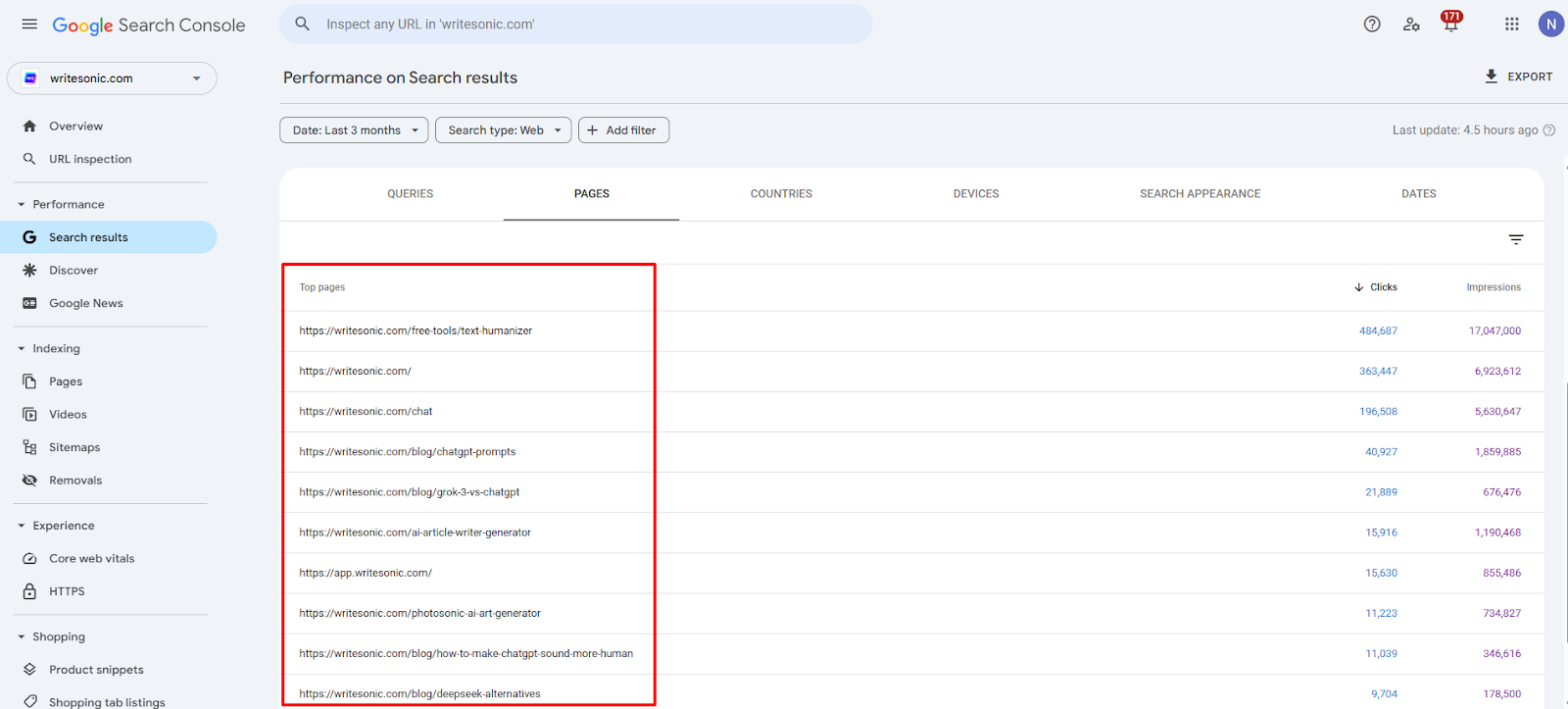
For websites with existing content, Google Search Console's Performance report reveals which pages are already receiving impressions for specific queries. Pages already ranking in positions 3–15 for a keyword that triggers a SERP feature are the highest-probability optimization candidates — they have existing relevance signals and need content restructuring rather than new ranking authority.
Best for: Identifying quick-win opportunities from existing content that already ranks but lacks SERP feature optimization.
Method 3: AI-Assisted Keyword Research
AI SEO agents connected to keyword research tools (Ahrefs, Semrush, Google Search Console) can analyze keywords in bulk, identify SERP feature triggers, and prioritize opportunities by difficulty and potential impact — completing in minutes what would take hours of manual research.
Prompt template for AI-assisted SERP feature research: "Find 20 keywords that trigger SERP features I can realistically rank for. My seed keyword is [keyword] and my domain is [domain.com]. Include the specific SERP feature type for each keyword."
Best for: Large-scale SERP feature opportunity identification across broad topic clusters.
Dageno AI: Where SERP Feature Optimization Meets AI Search Visibility

SERP feature optimization and AI search visibility are increasingly the same discipline. The content structures that earn featured snippets (direct answers, question-based headings, FAQPage schema) are the same structures that generate AI Overview citations and improve AI citation rates across ChatGPT, Gemini, and Perplexity. Optimizing for one has compounding benefits for the other.
Dageno AI provides the measurement and optimization infrastructure that connects SERP feature performance to AI search visibility — enabling marketing teams to see how their content is performing across both surfaces in a unified dashboard. Dageno AI monitors brand citations across Google AI Mode, AI Overviews, ChatGPT, Perplexity, Claude, and other major AI platforms in real time, revealing whether SERP feature optimization efforts are translating into AI citation improvements or whether additional GEO optimization is needed.
For SEO teams that have optimized for featured snippets and AI Overviews but still find their brand underperforming in conversational AI responses, Dageno AI's semantic gap analysis identifies the specific content structures and entity relationships that need adjustment to close the AI citation gap. The platform's AI Search Analyzer extension provides real-time on-page auditing for both traditional SERP feature eligibility signals and AI-specific readiness indicators — including schema validation, heading structure, content extraction format, and AI crawler accessibility — in a single audit workflow.
As AI Overviews continue expanding and AI Mode absorbs more high-intent queries, the brands that have built systematic SERP feature and AI visibility optimization practices will have compounding discoverability advantages over those that remained focused exclusively on traditional organic rankings.
Track your AI Overviews and SERP feature performance with Dageno AI →
Ready to dominate AI search?
Get started - it's free! >SERP Feature Optimization Quick Reference
| SERP Feature | Primary Trigger | Optimization Priority | Schema Type |
|---|---|---|---|
| Featured Snippet | Informational queries | Question-based H2 + 40-60 word direct answer | FAQPage |
| AI Overview | Complex informational queries | Top 10 ranking + structured answers | Article + FAQPage |
| People Also Ask | Related user questions | FAQ sections with question-format headings | FAQPage |
| Knowledge Panel | Entity/brand searches | NAP consistency + entity footprint | Organization |
| Discussions & Forums | Opinion/experience queries | Authentic Reddit/Quora participation | None required |
| Image Pack | Visual queries | Alt text + descriptive captions + file names | ImageObject |
| Video Carousel | How-to/tutorial queries | YouTube optimization + VideoObject schema | VideoObject |
| Local Pack | Local intent queries | GBP optimization + NAP consistency + reviews | LocalBusiness |
| Popular Products | Product queries | Google Merchant Center + Product schema | Product + Offer |
| Rich Snippets | Multiple intent types | Appropriate structured data markup | Varies by type |
| Top Stories | News/current events | Google News indexing + NewsArticle schema | NewsArticle |
References
About the Author

Updated by
Dageno
Dageno is the research and insights team at Dageno AI, publishing industry reports and expert analysis on AI Search Visibility, Generative Engine Optimization (GEO), and AI-powered search discovery.
Related Articles
Amazon Rufus AI Optimization: Complete Guide for AI Shopping Visibility

Ye Faye • May 07, 2026
AI SEO: Complete Guide to Optimizing for LLMs and AI Search in 2026

Tim • Sep 11, 2026
AI Search Visibility: A Complete Guide to Mentions, Citations, and Recommendations
Dageno • Sep 14, 2026
Pagination SEO: The Complete Guide to Optimizing Paginated Content
Dageno • Apr 15, 2026