What Is Generative Engine Optimization (GEO)?
GEO is the practice of optimizing your brand so AI systems like ChatGPT, Perplexity, and Gemini cite and recommend you — this complete playbook covers the strategy, measurement framework, and implementation steps from zero to visibility.
Track AI search visibilityNo install

Updated by
9 Min Read
Updated on May 11, 2026
TL;DR: 40.58% of AI Overview citations come from Google's top 10 organic results — but over half don't. That gap is GEO's opportunity. Generative Engine Optimization (GEO) is the discipline of getting your brand mentioned and cited inside AI-generated answers, not just ranked in search results. This guide covers the 6-step GEO framework, 6 metrics to track, common misconceptions, and the platforms that make GEO systematic rather than speculative.
"SEO is dead" has been a reliable attention-grabbing claim in marketing circles since approximately 2012. The people making the claim in 2026 are not entirely wrong about what has changed, but they are wrong about what it means. SEO isn't dead — but it has a new companion discipline that marketers can no longer afford to ignore.
Generative Engine Optimization (GEO) is the practice of structuring your content and brand presence so that AI platforms like ChatGPT, Perplexity, Google Gemini, and Claude cite your brand when generating answers to questions in your category. If SEO helps you rank in search results pages, GEO helps you appear in the synthesized answers that are increasingly replacing those pages as the primary discovery layer for high-intent queries.

What Is Generative Engine Optimization, Precisely Defined
GEO is the process of optimizing content to get brand mentions, citations, and recommendations inside AI-generated answers. Where traditional SEO asks "how do we rank on page one?", GEO asks "how do we become the source AI chooses to reference when answering questions our customers are asking?"
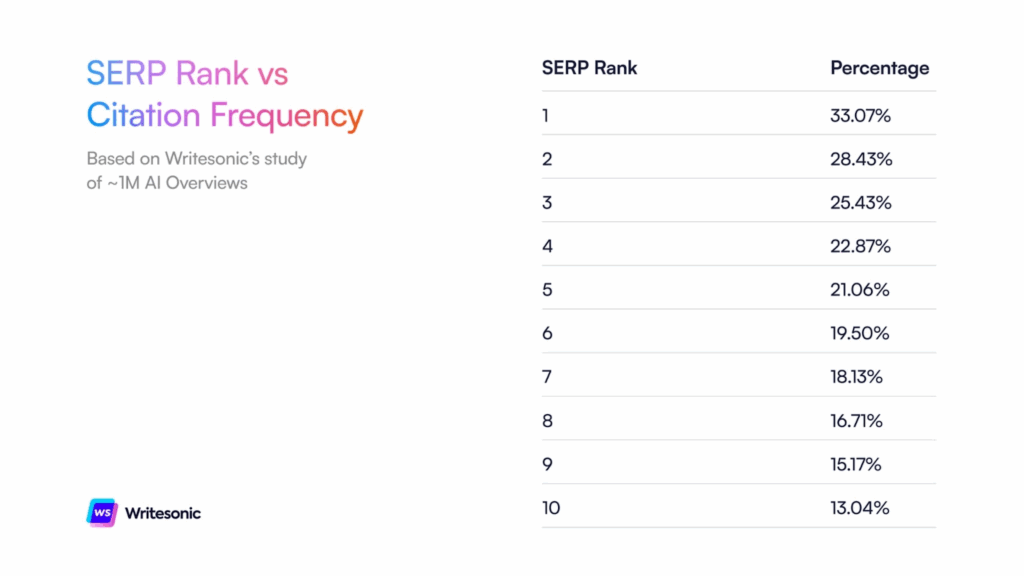
The relationship to SEO is additive, not competitive. Research from Writesonic's analysis of over one million AI Overviews found that 40.58% of AI citations come from Google's top 10 results — confirming that strong SEO performance is still a meaningful predictor of AI citation probability. But 59.42% of citations come from outside the top 10. That majority is the distinctly GEO-shaped opportunity: brands that earn AI citations based on content structure, authority signals, and semantic clarity rather than traditional link-based ranking signals.
Another way to frame the difference: SEO builds the authority. GEO amplifies it.
GEO vs. SEO: The Key Differences
| Dimension | GEO | SEO |
|---|---|---|
| Goal | Get cited or mentioned inside AI-generated answers | Rank high in search results to drive clicks |
| Optimization target | AI language models (ChatGPT, Gemini, Perplexity, Claude) | Search engine algorithms |
| Core focus | Prompts, citations, and entity clarity | Keywords, backlinks, and technical structure |
| Success metrics | Mentions, citations, AI visibility score, share of voice | Rankings, clicks, organic sessions |
| User journey impact | Puts your brand in the answer before the click | Brings people to your site from search |
| Platform diversity | 8–12 major AI platforms with different citation behaviors | Primarily Google, with Bing and others secondary |
The most important insight from this comparison: GEO and SEO are not enemies. The fundamentals that make content trustworthy for Google — clarity, authority, factual accuracy, and relevance — are the same fundamentals that make content trusted by AI systems. What GEO adds is the specific layer of structure, entity clarity, and semantic depth that AI extraction systems require.
Why GEO Matters Right Now — The Data That Makes It Urgent
AI Overviews Are Already in Most Commercial Search Experiences
Ahrefs' study of 55.8 million AI Overviews found that AI-generated summaries now appear in more than 54.6% of all Google searches. In volume terms, AI Overviews have become the dominant result format for high-traffic commercial queries. The same research documented a 34.5% decline in click-through rates to source pages when AI Overviews appear.
For brands that measure marketing success in terms of website traffic from organic search, this is already a significant impact. For brands that want to be where buyers are forming opinions before they click anything, AI Overviews represent the highest-priority optimization surface in modern digital marketing.
AI-Attributed Citations Don't Automatically Follow SEO Rankings
The relationship between search ranking and AI citation probability is real but imperfect. Writesonic's analysis documented that 40.58% of AI Overview citations originate from Google's top 10 organic results. Separately, Ahrefs found that approximately 14.4% of AI citations come from pages outside Google's top 100 entirely. This disconnect — brands with strong SEO performance that are absent from AI answers, and brands with weaker traditional rankings that appear consistently in AI responses — is what GEO optimization addresses.
AI Search Is Where Buying Decisions Happen
Research from Salesforce found that 65% of generative AI users are Millennials or Gen Z, with 70% of Gen Z using generative AI regularly. These are the current and next generation of buyers and B2B decision-makers. And with OpenAI's shopping capabilities enabling purchases directly inside ChatGPT, AI visibility is no longer just about awareness — it's about conversion.
Early Movers Build Compounding Advantages
GEO is currently at an early adoption stage comparable to where SEO was in approximately 2010 — before competition intensified and before the discipline became mandatory. Brands that establish AI citation authority now are building recognition patterns that AI systems reinforce over time. Models that consistently cite a brand across training updates are increasingly likely to continue doing so, creating a compounding visibility advantage that brands entering later will find difficult to catch up with.
The 6-Step GEO Implementation Framework
Step 1: Map High-Value Prompts
GEO strategy begins with prompt research — the AI-era equivalent of keyword research. Instead of asking "what are people searching for?", prompt research asks "what are people asking AI?"
High-value prompts for a GEO strategy share several characteristics: they have clear commercial intent relevant to your brand's category, they are conversational and specific (reflecting how users actually phrase questions to AI systems), and they represent moments where a brand citation would carry genuine influence over a purchase or evaluation decision.
Start by running topic-relevant queries in ChatGPT, Gemini, and Perplexity to observe which brands get cited and in what context. Identify queries where your brand should appear but doesn't — these are your primary optimization targets. Build a tracking list of 50–100 high-value prompts that represent the most strategically important AI moments for your brand.
Goal: A prompt library that defines where your brand needs to win AI visibility, prioritized by business value and current citation gap size.
Step 2: Structure Content for AI Extraction
AI systems look for content that is clear, organized, and directly answerable. The structural shift GEO requires is moving from content designed to rank for a keyword to content designed to be extracted as an authoritative answer.
Key structural principles for GEO-ready content:
- BLUF (Bottom Line Up Front): Open every section with a direct, concise answer (40–60 words) before providing supporting context. AI systems prefer content where the answer is immediately accessible.
- Question-based headings: Structure H2 and H3 headings as questions that mirror how users phrase queries to AI systems ("What is...?", "How does...?", "Why does...?")
- Schema markup: Implement FAQPage, HowTo, Article, Organization, and Product schema to help AI systems accurately interpret content structure and entity relationships
- Consistent entity naming: Use your brand name, product names, and category terms consistently and precisely throughout content — variation in naming creates entity disambiguation problems
Step 3: Strengthen Authority and Citation Signals
AI citation is built on trust. AI systems decide which sources to reference based on perceived authority, factual reliability, and external validation. Building GEO authority requires:
- Earning mentions across credible sites: Press mentions, editorial features, industry publications, partnership announcements — everything that creates external evidence of expertise
- Publishing original research and data: AI systems prioritize data-driven sources. Original research, case studies, and proprietary data reports help establish your brand as a primary source rather than a secondary reference
- Building consistent topical authority: Deep content coverage across tightly related topic clusters signals to AI systems that your brand has genuine expertise, rather than isolated high-quality pieces
- Co-occurrence across authoritative sources: Research from Higoodie's V3 AEO Periodic Table found that being consistently mentioned across authoritative domains significantly improves AI citation rates — not just having a strong domain yourself
Step 4: Optimize for AI Context, Not Just Keywords
Traditional SEO focused on exact-match and related keywords. GEO optimization focuses on semantic richness and contextual clarity. AI systems use semantic embeddings to understand meaning and intent, not keyword matching — which means content needs to be contextually complete, not just keyword-dense.
Write in conversational tone that reflects how people phrase questions to AI systems. Include context-bridging sentences that explain connections between related concepts — AI systems parse these relationships when building response summaries. Cover the full question intent, not just partial answers, since AI systems favor sources that comprehensively address user intent.
Step 5: Monitor, Measure, and Iterate
GEO is not a one-time optimization. AI platforms update their source preferences, model parameters, and citation patterns continuously. Maintaining AI visibility requires continuous monitoring and iterative improvement.
Track AI visibility across all major platforms at consistent intervals — weekly monitoring provides enough granularity to catch meaningful changes without creating noise. Analyze share of AI voice across your most important prompt categories. Identify prompts where competitor visibility is increasing relative to yours, and audit the content or authority signals that may be driving the gap.
Step 6: Integrate GEO Into Your SEO Workflow
GEO works best when it is treated as an extension of SEO rather than a separate discipline. The keyword research, content briefs, and editorial calendars already in use for SEO can be expanded with prompt research and GEO-specific optimization criteria without creating duplicate workflows. Measure both SEO rankings and AI citation metrics in the same reporting cycle. Train content teams on GEO-friendly formatting as part of existing style guides.
6 GEO Metrics to Track: Your AI Visibility Dashboard
Metric 1: Overall AI Visibility Score
The percentage of tracked AI queries that include your brand in the response. This is the north-star GEO metric — the broadest measure of whether GEO efforts are producing results across the target AI platforms. Track this weekly and by platform to catch model-specific changes.
Metric 2: Brand Mentions
How often AI systems name your brand in generated responses, even without direct attribution. Brand mentions indicate AI system recognition — the model knows your brand and associates it with the relevant topic area. Track mentions separately from citations, as the gap between them reveals attribution opportunities.

Metric 3: AI Citations
How often AI systems attribute or link to your content as a source — the trust metric of GEO, equivalent to backlinks in traditional SEO. Citations mean the AI system is treating your content as a primary reference, not just one of many mentions. Track total pages cited and which content types generate citations most frequently.
Metric 4: Share of AI Voice (Competitor Benchmarking)
Your brand's citation frequency as a percentage of total AI citations across your category. This competitive metric reveals market position in AI-generated recommendations and identifies where competitors are consistently winning citations that should belong to your brand.

Metric 5: Visibility Trends Over Time
How AI visibility changes week-to-week across each major platform. Trend tracking reveals whether GEO efforts are producing cumulative improvement or whether model updates are causing regression. Correlate trend inflection points with content updates, authority-building activities, or known model updates.
Metric 6: Sentiment and Context
How AI systems describe your brand when they mention it — whether the framing is positive, neutral, or negative, and whether the context accurately reflects your actual positioning. Treat sentiment monitoring as an early warning system for brand safety: a single recurring negative framing in AI answers can shape buyer perception at scale before any traditional marketing channels would detect the issue.
Dageno AI: Making GEO Measurable and Systematic

GEO strategy without systematic measurement is indistinguishable from guesswork. Understanding which prompts are generating AI citations, which platforms are under-representing your brand, what content changes would improve specific metrics, and how your AI share of voice compares to competitors requires a dedicated platform — not manual sampling or proxy metrics from traditional analytics tools.
Dageno AI is built specifically for the GEO measurement and optimization challenges that marketing teams face as AI search becomes a primary discovery channel. Dageno AI monitors brand citations, share of voice, sentiment, and positioning accuracy across ChatGPT, Perplexity, Gemini, Google AI Mode, AI Overviews, Claude, Grok, Copilot, and Llama in real time — giving teams the AI visibility intelligence that traditional analytics tools fundamentally cannot provide.
The platform's GEO content optimizer goes beyond monitoring to provide specific, actionable guidance: when AI systems are under-representing a brand for a target category of queries, Dageno AI identifies exactly which content structures, entity relationships, and semantic gaps are causing the gap — and generates structured recommendations for closing it. The Knowledge Graph injection feature strengthens brand entity associations that increase citation frequency in AI Overviews and conversational AI answers. The Query Fan-Out analysis reveals the full spread of sub-queries that AI systems generate from user prompts, enabling content teams to build comprehensive topical coverage rather than optimizing for individual queries in isolation.
For GEO programs just getting started, Dageno AI's AI Search Analyzer browser extension provides immediate on-page feedback — schema validity, crawlability signals, AI search performance indicators — enabling content teams to self-audit for GEO readiness without specialist technical knowledge. A free plan makes Dageno AI accessible to teams at every stage of GEO maturity.
Explore Dageno AI's GEO platform →
Ready to dominate AI search?
Get started - it's free! >Three Common GEO Misconceptions — Corrected
"GEO is replacing SEO."
This framing is both inaccurate and counterproductive. The brands that appear most frequently in AI citations are overwhelmingly the same brands that perform strongly in traditional organic search. GEO requires strong SEO as its foundation. What GEO adds is the additional layer of content structure, trust signals, and source diversity that turns strong SEO performance into strong AI citation performance. Drop either discipline and you're doing half the job.
"You can't influence what AI systems cite."
You cannot force AI citation, but you can systematically earn it. Publishing structured content that is easy for AI systems to trust and extract, implementing schema markup that communicates content type and entity relationships, building cross-source authority through earned media and community presence, and monitoring AI citation patterns to identify optimization opportunities — all of these produce measurable improvements in AI citation rates. The relationship is probabilistic, not deterministic, but it is directional and improvable.
"It's too early to measure GEO."
AI visibility is measurable today with dedicated platforms. The more relevant question is whether waiting to measure means watching competitors build AI citation authority while you're still debating whether the discipline is real. Brands that establish GEO measurement now have the data to improve. Brands that wait will find themselves behind on a compounding advantage that became increasingly difficult to close.
GEO FAQ
Is GEO replacing SEO?
No. GEO extends and amplifies SEO. Strong organic performance remains the foundation for AI citation probability.
How long does it take to see GEO results?
AI citation improvements typically follow a 4–12 week lag after optimization, depending on crawl frequency and model update cycles. Platforms with real-time retrieval (Perplexity, ChatGPT with browsing) can reflect improvements faster than training-data-based updates.
Can small brands compete with larger competitors in GEO?
Yes — GEO rewards clarity, expertise, and specificity more than domain authority alone. A focused, deeply expert brand can achieve strong AI citation rates in its specific category ahead of a larger generalist competitor.
What makes Dageno AI different from other GEO measurement tools?
Most GEO platforms report what's happening. Dageno AI explains why it's happening and provides specific guidance on what to change. The combination of monitoring + semantic gap analysis + GEO content optimizer + Knowledge Graph injection makes Dageno AI unique among accessible (non-enterprise) GEO platforms.
References
- Ahrefs – Insights from 56 Million AI Overviews
- Ahrefs – 1.9 Million AI Citation Study: SERP Rank Correlation
- Salesforce – Generative AI Statistics: Gen Z and Millennial Adoption
- McKinsey – The Economic Potential of Generative AI
- Dageno AI – Best LLM SEO Trackers for 2026
- Dageno AI – Best AI Search Visibility Tracking Tools
About the Author

Updated by
Dageno
Dageno is the research and insights team at Dageno AI, publishing industry reports and expert analysis on AI Search Visibility, Generative Engine Optimization (GEO), and AI-powered search discovery.
Related Articles
Gemini AI Brand Mention Tracking: Complete Guide

Ye Faye • Sep 14, 2026
AI Crawlers Optimization: How to Prepare Your Website for AI Bots

Tim • Apr 20, 2026
Brand Positioning in AI: How to Stand Out in AI-Generated Answers
Tim • Sep 11, 2026
PR for AI Search Visibility: How Earned Media Drives AI Citations in 2026
Dageno • Apr 02, 2026